Home / Blog / How to Adapt Family Recipes for Nut Allergies
How to Adapt Family Recipes for Nut Allergies
Practical swaps and safety tips to make family recipes nut-free—seed and oat alternatives, cleaning to prevent cross-contact, and baking adjustments.
How to Adapt Family Recipes for Nut Allergies
When someone in the family has a nut allergy, adjusting recipes becomes essential to ensure safety while keeping meals enjoyable. Nut allergies affect millions in the U.S., with peanuts and tree nuts among the top allergens. Even trace amounts can trigger severe reactions like anaphylaxis. Here's the good news: nuts are one of the easiest ingredients to replace.
Key Takeaways:
- Substitutions: Replace nuts with seeds (like sunflower or pumpkin), roasted beans, or even crushed pretzels. Adjust quantities and toasting techniques for texture and flavor.
- Cross-Contamination: Clean surfaces thoroughly, use separate tools, and store nut-free ingredients properly.
- Recipe Tips: Swap almond flour with oat flour plus oil, use sunflower seed butter instead of peanut butter, and try toasted seeds in place of pine nuts for pesto.
With simple ingredient swaps and careful preparation, you can modify recipes to be nut-free without losing their essence. Tools like RecipeFix can also simplify the process by suggesting tailored substitutions.
Understanding Nut Allergies and Recipe Modification Challenges
What Are Nut Allergies?
Nut allergies happen when the immune system mistakes proteins in tree nuts or peanuts for harmful invaders, triggering the production of IgE antibodies and leading to an allergic reaction.
The most severe risk is anaphylaxis, a fast, life-threatening reaction. It can cause a sudden drop in blood pressure and swelling in the airways, making it difficult to breathe. Symptoms can appear within seconds or up to two hours after consuming nuts and may include hives, facial swelling, wheezing, stomach pain, vomiting, or even fainting.
The most common tree nuts that cause allergies are walnuts, almonds, hazelnuts, pecans, cashews, and pistachios. About 2% of children have tree nut allergies, and nearly 50% of those allergic to one tree nut are also allergic to another. Additionally, between 25% and 40% of people with peanut allergies react to at least one type of tree nut. Unfortunately, for most people, tree nut allergies are lifelong, with only 9% to 10% of children eventually outgrowing them.
For those with nut allergies, carrying an epinephrine auto-injector (such as an EpiPen) is essential, as it's the only effective treatment for anaphylactic shock. These severe risks highlight the importance of adapting recipes carefully to avoid exposure.
Common Problems When Modifying Family Recipes
Adjusting recipes for nut allergies can be tricky because nuts often serve multiple roles beyond just flavor. Substituting nuts isn’t always straightforward - they add structure (when used as a meal), fat (in butters or oils), flavor (that distinct roasted richness), or crunch (as toppings). The challenge lies in finding replacements that maintain the dish’s core qualities while ensuring safety.
Texture changes are a frequent issue. Seeds, for example, are denser than nuts, so using the same amount can make baked goods feel heavier. A common rule of thumb is to use about 3/4 cup of seeds for every 1 cup of nuts to achieve a similar texture. Additionally, substitutes like oat flour or seeds tend to brown faster than nut flours, so baking times often need tweaking.
Flavor differences can also pose problems. Sunflower seed butter, for instance, has a "grassy" or raw taste compared to the smoother, richer profiles of peanut or cashew butter. When working with recipes that have only a few ingredients, replacing multiple components can dramatically change the dish. As Kids With Food Allergies explains:
"If the recipe only has 5 ingredients and you need to swap out 4 of them, the end result might bear little resemblance to the original dish".
Leaving nuts out entirely without a substitute can reduce batter volume and lead to uneven baking results. The solution is to match the substitute to the specific role the nut plays in the recipe, then adjust other elements like fats or liquids to balance the changes.
sbb-itb-ac3a9b8
The best cup for cup substitutes for peanuts and tree nuts in recipes
Nut-Free Ingredient Substitutions for Common Recipes
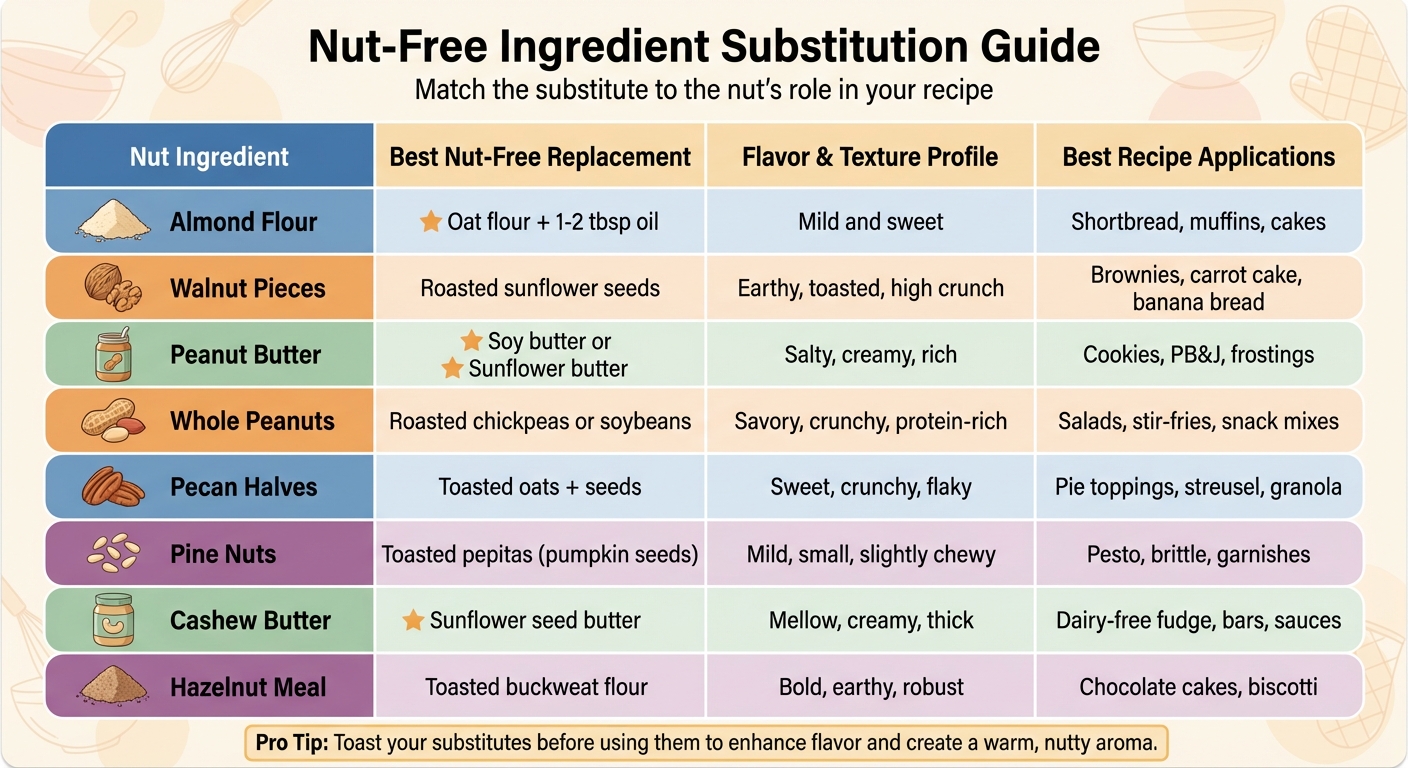
Nut-Free Ingredient Substitution Guide for Common Recipe Ingredients
Nut-Free Substitution Table
When replacing nuts in recipes, it’s essential to know the role the original ingredient plays. Mo Maruf, Founder of KitchPrep, puts it perfectly:
"Start with the role the original nut ingredient played... Name the job first, then match that job with a nut-free alternative that can deliver the same outcome".
Here’s a handy table with common nut ingredients, their best nut-free replacements, and tips on where they work best:
| Nut Ingredient | Best Nut-Free Replacement | Flavor & Texture Profile | Best Recipe Applications |
|---|---|---|---|
| Almond Flour | Oat flour + 1-2 tbsp oil | Mild and sweet | Shortbread, muffins, cakes |
| Walnut Pieces | Roasted sunflower seeds | Earthy, toasted, high crunch | Brownies, carrot cake, banana bread |
| Peanut Butter | Soy butter or Sunflower butter | Salty, creamy, rich | Cookies, PB&J, frostings |
| Whole Peanuts | Roasted chickpeas or soybeans | Savory, crunchy, protein-rich | Salads, stir-fries, snack mixes |
| Pecan Halves | Toasted oats + seeds | Sweet, crunchy, flaky | Pie toppings, streusel, granola |
| Pine Nuts | Toasted pepitas (pumpkin seeds) | Mild, small, slightly chewy | Pesto, brittle, garnishes |
| Cashew Butter | Sunflower seed butter | Mellow, creamy, thick | Dairy-free fudge, bars, sauces |
| Hazelnut Meal | Toasted buckwheat flour | Bold, earthy, robust | Chocolate cakes, biscotti |
If you’re looking for versatility, sunflower seeds and pumpkin seeds are excellent for granola, breads, and toppings, offering a satisfying crunch and protein content. For savory recipes or snacks that call for peanuts, roasted soybeans or chickpeas are great options, as peanuts are legumes too. Another interesting option is tiger nuts - though technically tubers, they deliver a nutty flavor but with a slightly grittier texture.
How to Choose the Right Substitutes
Once you’ve identified the nut’s role in your recipe, use these tips to pick the best alternative:
- For baking structure, swap almond flour with oat flour and a bit of oil to maintain moisture and texture.
- For creamy spreads or frostings, go for sunflower seed butter or soy nut butter as a 1:1 replacement for peanut or cashew butter. Soy butter, in particular, closely mimics peanut butter’s flavor and texture.
- For sauces like pesto, toasted pepitas are ideal - they mimic the mild flavor and small size of pine nuts.
One key step: toast your substitutes before using them. Toasting seeds or oats in a dry pan enhances their flavor, giving them a warmer, nuttier aroma that raw substitutes often lack. This simple step can elevate the taste of cookies, bars, or cakes.
These thoughtful substitutions let you keep the essence of your favorite recipes while ensuring they’re safe and nut-free for everyone to enjoy.
Preventing Cross-Contamination During Preparation
Clean and Organize Your Kitchen
Creating a safe, nut-free kitchen starts with a thorough cleaning routine. This goes beyond just wiping down surfaces - cross-contact, where allergen proteins transfer from one surface to another, can persist even after cooking, unlike bacteria.
Start by using a paper towel to remove visible nut crumbs to minimize allergen spread. Then, scrub surfaces with hot, soapy water for at least 20 seconds, rinse thoroughly, and sanitize with a bleach solution (1 tablespoon per gallon of water). Let the surfaces air dry to ensure proper sanitization.
Handwashing is equally important. Use soap and warm water, scrubbing for 20 seconds. Keep in mind that alcohol-based sanitizers won't remove food allergens. Cambria Glosz, RD, from The Nutrition Insider, emphasizes:
"Food protein must be removed from surfaces or utensils with soap and hot water - wiping away crumbs will not be sufficient".
For utensils and tools, replace porous items like wooden spoons or cutting boards with non-porous alternatives, as they are easier to clean and less likely to retain allergens. Once everything is sanitized, assign specific areas and tools exclusively for nut-free food preparation.
Set Up Nut-Free Zones and Use Separate Tools
After cleaning, it's crucial to establish nut-free areas in your kitchen to maintain safety. Dedicate a specific countertop or prep station where nut products are never allowed. To further reduce risk, always prepare nut-free meals first to keep the workspace as clean as possible.
A practical tip is to implement a color-coded system. For instance, use green cutting boards, knives, and spatulas exclusively for nut-free cooking. Be mindful of appliances like toasters, blenders, and food processors, as they can trap allergen particles in hard-to-reach areas. If buying duplicates isn't an option, ensure removable parts are thoroughly cleaned - use a dishwasher with a heated drying cycle or soak them in hot, soapy water.
To prevent cross-contact during storage, keep nut-free ingredients on top shelves and store nut-containing items on lower shelves in sealed, clearly labeled containers. For shared condiments like jelly or honey, switch to squeeze bottles to avoid cross-contact from utensils that may have touched nut products.
Adapting Specific Family Recipes: Examples and Tips
Building on substitution strategies, here are some practical ideas for adjusting family recipes to be nut-free while keeping their flavor and texture intact. Toasting seeds and oats before using them can enhance their flavor, giving them a warm, nutty aroma that works well in traditional recipes.
Replacing Nuts in Granola Bars and Snacks
For nut-free granola bars, sunflower seeds, pumpkin seeds, and toasted oats are excellent options. They provide a satisfying crunch and protein similar to nuts. When swapping chopped nuts with roasted seeds, use about 3/4 cup of seeds for every 1 cup of nuts to avoid overpowering the texture, as seeds are denser.
For binding, replace peanut or almond butter with sunflower seed butter or tahini. If sunflower seed butter tastes too raw, toast it lightly to bring out its flavor. Roasted chickpeas and toasted oats can add texture and an earthy, nutty depth. If substituting oat flour for almond flour, include 1 to 2 tablespoons of oil per cup to keep the bars tender.
Nut-free snack bars, like "No Nuts!" bars, show that these alternatives can still deliver great taste and texture, with a customer rating of 4.86 out of 5 from 697 reviews. Store your homemade bars in an airtight container in a cool, dry place for up to two weeks.
Substituting Nut Butters in Spreads and Baked Goods
Sunflower seed butter is a strong contender for replacing peanut butter, offering similar spreadability and performing well in baked goods. Mo Maruf from KitchPrep highlights that it creates cookies with crisp edges and chewy centers. Use it as a 1:1 substitute by weight to maintain the correct fat-to-moisture balance in your recipes.
Since seed butters can have a more robust, earthier flavor, pair them with bold ingredients like chocolate, coffee, or dark brown sugar to balance the taste. Additionally, chilling cookie dough for at least 20 minutes can help manage spreading and browning caused by seed butters.
Tahini works beautifully in shortbread and savory sauces, while chickpea butter provides a thick consistency similar to peanut butter, making it great for sandwiches. Tiger nut butter, derived from tubers, has a natural sweetness that shines in cookies and cheesecakes.
Making Nut-Free Pesto and Sauces
Pumpkin seeds (pepitas) and sunflower seeds can effectively replace pine nuts in pesto, especially when toasted. Toasting helps bring out a flavor profile similar to traditional pesto. David Pope, founder of Cooking Chat, notes:
"Lightly toasted pumpkin seeds in place of pine nuts makes a great tasting pesto. You'd be hard pressed to discern the difference from the typical recipe".
This swap is also budget-friendly - pine nuts range from $9.00 to $20.00 per pound, while sunflower seeds cost about