Home / Blog / The Complete Guide to Converting Recipes for Any Diet
The Complete Guide to Converting Recipes for Any Diet
Step-by-step guide to swap ingredients, preserve flavor and texture, fix common issues, and use AI tools to adapt recipes for any diet.
The Complete Guide to Converting Recipes for Any Diet
Adapting recipes to fit dietary needs can feel overwhelming, but it doesn’t have to be. Whether you're cooking gluten-free, vegan, dairy-free, keto, or paleo dishes, the key is understanding the role each ingredient plays in a recipe - structure, moisture, flavor, or leavening. Once you know this, you can make effective substitutions without sacrificing taste or texture.
Here’s a quick breakdown of what you’ll learn:
- Ingredient Substitution: Swap ingredients like eggs, flour, or dairy to meet dietary needs (e.g., flax eggs for binding or almond milk for creaminess).
- Maintaining Flavor and Texture: Use techniques like adding xanthan gum for gluten-free baking or cashew cream for dairy-free sauces.
- Fixing Common Issues: Solve problems like dryness, crumbliness, or imbalance in moisture by tweaking fat, liquid, or resting times.
- Using AI Tools: Platforms like RecipeFix can automate substitutions and adjust recipes for serving sizes or multiple restrictions.
The guide also includes tips for handling multiple dietary restrictions, maintaining nutritional balance, and even scaling recipes for different batch sizes. Whether you’re experimenting with a family favorite or tackling a new dish, these strategies will help you create meals that fit your diet without compromising on flavor.
Ready to dive in? Let’s explore how you can make any recipe work for your diet.
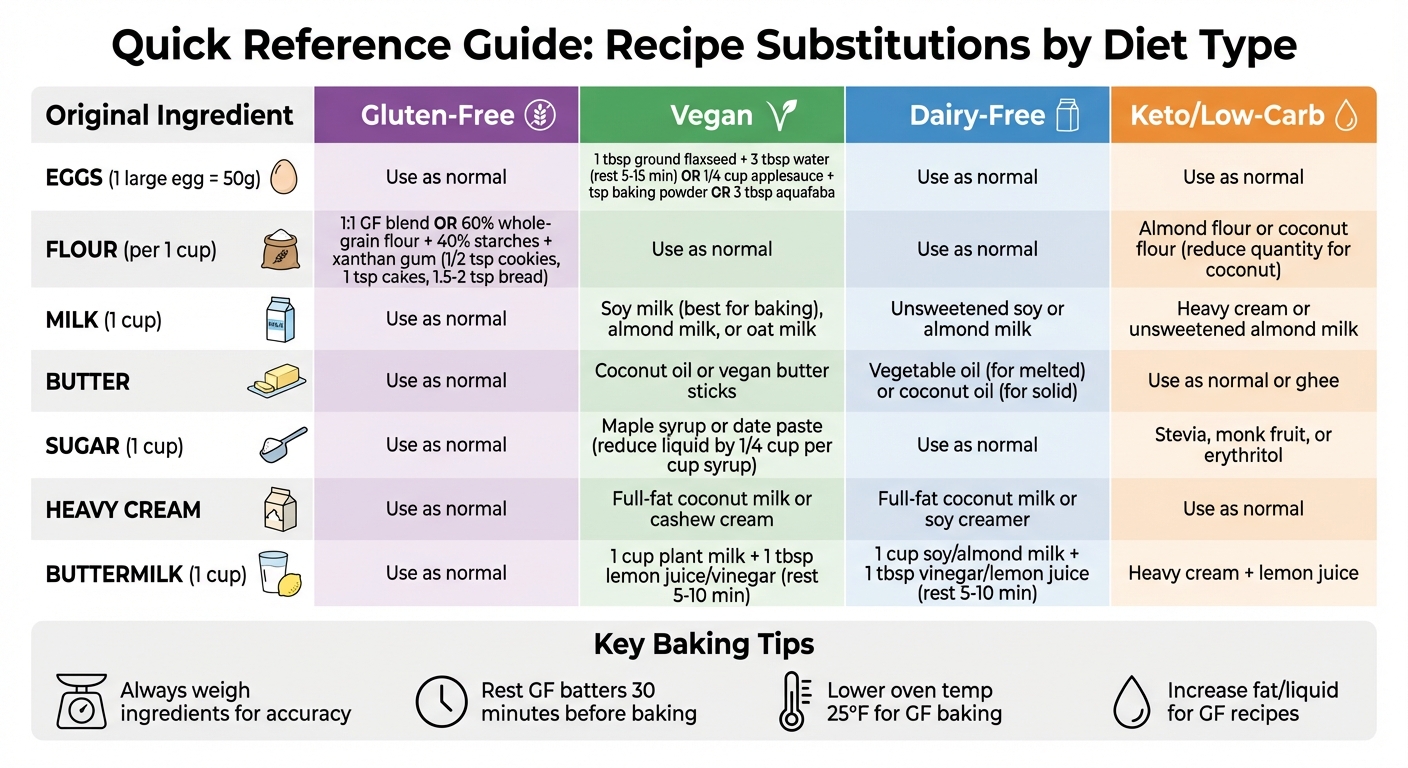
Essential Ingredient Substitution Guide for Common Dietary Restrictions
Recipe Conversion Basics
Ingredient Substitution vs. Ratio Adjustments
Ingredient substitution involves swapping one ingredient for another that serves a similar purpose - like replacing cow's milk with almond milk. On the other hand, ratio adjustment is about tweaking the amounts of multiple ingredients to maintain balance when a substitute behaves differently from the original.
For example, if you're replacing one large egg (about 50 grams) with a flax egg, mix 1 tablespoon of ground flaxseed with 3 tablespoons of water and let it thicken for 5–15 minutes. You may also need to adjust leavening agents to account for the difference.
"Substitution means replacing one ingredient in a recipe with another that performs a similar function... Correct substitution ensures recipes still taste good, maintain desirable texture, and meet nutritional requirements."
- Ijaz Malik, Author, TexasRealFood
This concept applies to other swaps too. For instance, if you're using honey or maple syrup instead of granulated sugar, reduce the liquid in the recipe by 1/4 cup for every cup of syrup. Similarly, coconut flour absorbs much more liquid than wheat flour, so a direct 1:1 replacement won't work.
When scaling recipes, not all ingredients can be doubled evenly. Strong flavors like spices or salt should follow the 75% rule - multiply them by 1.5 instead of 2 when doubling a recipe, then adjust to taste.
Now, let’s look at how to preserve the flavor and texture of recipes when making substitutions.
How to Preserve Flavor and Texture
Before making any substitutions, think about the role each ingredient plays - whether it provides structure, moisture, leavening, or flavor.
For gluten-free recipes, removing gluten means losing the structural framework in baked goods. To compensate, use binders like xanthan gum, psyllium husk, or flax seeds. A general guideline: use 1/2 teaspoon of xanthan gum per cup of gluten-free flour for cookies and bars, 1 teaspoon for cakes and muffins, and 1.5–2 teaspoons for bread or pizza dough.
Gluten-free flours also absorb more liquid, which can result in dry, crumbly textures. To counteract this, increase the fat - try adding an extra egg yolk or a touch of sour cream - and let the batter rest for at least 30 minutes to allow the starches to hydrate fully. Lowering the oven temperature by 25°F can also help prevent over-browning.
"Gluten-free flours are incredibly thirsty, and they need more help to create the tender, moist crumb we all crave."
- Silas, Founder, Flavor365
If you're reducing salt or sugar, enhance flavors with aromatics like fresh herbs, citrus zest, vinegar, or natural sweeteners like dates or vanilla extract. For gluten-free flour blends, aim for a mix of 60% whole-grain flours to 40% starches for the best balance of flavor and texture. Always use a digital kitchen scale to measure ingredients by weight, as alternative flours vary greatly in density.
These methods will help you maintain the taste and texture of your recipes, no matter the dietary adjustments.
Common Problems and Solutions
If your gluten-free baked goods turn out crumbly, try adding xanthan gum, increasing fat or liquid, and resting the batter for 30 minutes before baking.
Adjusting cooking times is another challenge when scaling recipes. For smaller batches, reduce cooking time by 10–25% and check for doneness 15 minutes earlier. For larger batches, increase cooking time by 25–50% and lower the oven temperature by 25°F, especially for dense dishes like cakes or casseroles.
Moisture imbalance can happen when swapping wet and dry ingredients. Stick to the rule of wet-for-wet and dry-for-dry - replace oil with applesauce, for example, without disrupting other ratios. When scaling soups or sauces, hold back 10–20% of the liquid at first, as evaporation doesn’t scale proportionally with volume.
For vegan recipes with binding issues, try mixing 1/4 cup applesauce with 1/4 teaspoon baking powder. To replace buttermilk in dairy-free recipes, combine 1 cup of plant-based milk with 1 tablespoon of lemon juice or vinegar and let it sit for 5–10 minutes.
When experimenting with substitutions, start small - replace only 25% of the total flour with an alternative flour to see how it affects texture before committing to a full swap. And always taste as you go - you can add more, but you can’t take it out.
sbb-itb-ac3a9b8
Healthy Ingredient Swap
Converting Recipes for Specific Diets
Understanding how to adapt recipes for different dietary needs can transform your cooking skills. Let’s dive into some techniques for gluten-free, vegan, dairy-free, keto, and paleo diets.
Gluten-Free Conversions
Gluten-free baking comes with its own set of challenges, primarily replacing the structure that gluten provides. Without it, baked goods can fall apart, as Silas, the founder of Flavor365, describes: "a crumbly, sandy mess".
To tackle this, you can use a 1:1 gluten-free flour blend or create your own mix by combining 60% whole-grain flours (like sorghum, millet, or brown rice) with 40% starches (such as tapioca or potato starch). Binders are key. If your blend lacks xanthan gum, add it manually: 1/2 teaspoon per cup of flour for cookies, 1 teaspoon for cakes, and up to 2 teaspoons for breads.
Gluten-free flours soak up more liquid than wheat flour, so increase moisture by adding an extra egg, some sour cream, or yogurt. Let the batter rest for 30 minutes to hydrate the starches and reduce grittiness. Also, lower your oven temperature by 25°F to ensure even cooking.
For slow-cooker recipes, reduce liquid by 25–50% since gluten-free flours retain more moisture. To thicken sauces, substitute 1/2 teaspoon arrowroot powder for every cup of wheat flour. Don't forget to check labels - broths, canned goods, and chocolate often hide gluten.
Vegan Conversions
Vegan cooking means replacing animal products with plant-based alternatives that replicate binding, moisture, and flavor. Two big hurdles are replacing eggs and achieving depth of flavor without meat or animal broths.
For eggs, try these substitutes:
- 1/4 cup applesauce + 1/4 teaspoon baking powder for moisture
- 1 tablespoon ground flaxseed + 3 tablespoons water for binding
- 3 tablespoons aquafaba (chickpea water) for whipping.
For meat replacements, lentils mimic ground meat, chickpeas can stand in for chicken, and mushrooms or tofu add texture and umami. To enhance savory dishes, use nutritional yeast for a cheesy flavor, miso paste for umami, or mushroom broth instead of chicken or beef stock.
"Fish sauce isn't really about the fish; it's about adding a umami element that takes a dish to the next flavor level."
- Mary Margaret Chappell, Recipe Developer, Forks Over Knives
For creamy sauces, cashew cream or pureed white beans work well, while nutritional yeast can add a cheesy note to soups, pasta, or casseroles. Protein-rich foods like lentils, tempeh, and edamame help maintain nutritional balance.
Dairy-Free Conversions
Replacing dairy involves finding substitutes that match the creaminess and flavor of milk, butter, and cheese. The goal is to preserve texture and taste without compromising the dish.
For milk, soy milk works best for baking and cooking. Avoid boiling almond milk to prevent separation, and skip rice milk due to its gummy texture.
When replacing butter, use vegetable oil for melted butter or opt for coconut oil and vegan buttery sticks for solid butter. Keep in mind that these alternatives may be saltier, so adjust your recipe accordingly.
To make dairy-free buttermilk, combine 1 cup of unsweetened soy or almond milk with 1 tablespoon of vinegar or lemon juice, then let it sit for 5–10 minutes. For heavy cream, full-fat coconut milk or cream is a great option and can even be whipped. Soy creamer also works well in soups and sauces.
Coconut milk yogurt holds its structure during baking, and its flavor usually fades after cooking. Always check ingredient labels to avoid hidden dairy stabilizers.
Keto and Low-Carb Conversions
Keto recipes focus on high fat, moderate protein, and minimal carbs. This means finding alternatives for grains, starches, and sugars.
To thicken sauces, use xanthan gum sparingly or add cream cheese for a rich texture. For sweeteners, stevia, monk fruit, or erythritol work well, though stevia may affect texture in baked goods if overused.
Swap pasta with zucchini noodles, rice with cauliflower rice, and mashed potatoes with mashed cauliflower. For baking, almond and coconut flours are excellent choices, but remember that coconut flour is highly absorbent, so you’ll need to reduce the quantity.
Use tamari instead of soy sauce for gluten-free options, or coconut aminos for a lower-sodium, paleo-friendly alternative.
Paleo Conversions
The paleo diet eliminates processed foods, grains, legumes, and refined sugars, focusing on whole, unprocessed ingredients. This involves swapping grains and legumes for nutrient-rich alternatives.
For baking, almond or coconut flour works well. Since coconut flour is very absorbent, increase liquids by 25–50% and add extra eggs. To replace refined sugar, opt for honey, maple syrup, or coconut sugar.
Soy sauce can be swapped with coconut aminos, which are paleo-friendly and lower in sodium. To thicken sauces, use arrowroot powder mixed with cold water and add it toward the end of cooking.
Since legumes are off-limits, substitute beans with root vegetables like sweet potatoes or butternut squash in soups and stews. For protein, focus on grass-fed meats, wild-caught fish, and eggs.
How to Convert Any Recipe: Step-by-Step
Tweaking a recipe to match your dietary preferences or restrictions may seem daunting, but breaking it into manageable steps makes the process much simpler - and the results just as delicious.
Analyzing the Original Recipe
Start by understanding the purpose of each ingredient in the recipe. Does it provide structure, moisture, tenderness, or help with leavening? Chelsey Amer, a registered dietitian, explains:
"It's essential to know what the 'job' of eggs are in your recipe. The same can be true of flour, oil, or any ingredient"
For example, flour is often the backbone of structure, liquids add moisture, fats lend tenderness, and leavening agents (like baking soda or yeast) create rise. Knowing this helps you pick substitutes that can perform similar roles. If eggs act as a binder in a meatloaf, for instance, a mix of flaxseed meal and water can work as a replacement.
Also, consider the balance of wet and dry ingredients, as this ratio is critical for the final texture. Once you’ve identified the function of each ingredient, you’re ready to move on to substitutions.
Making Ingredient Substitutions
With a clear understanding of ingredient roles, you can start swapping. Stick to replacing wet ingredients with wet alternatives and dry ones with dry options to preserve the recipe's overall structure. For example, when replacing cheese, look for substitutes that mimic the original's melting properties or flavor. Similarly, if you’re swapping fish, match the fat content - lean fish for lean alternatives, and richer fish for equally fatty options. Vegetables can also be grouped by cooking times: quick-cooking veggies like zucchini can be swapped for peppers, while root vegetables like carrots are best replaced with similar starchy options.
Cutting back on fat? Try creamy alternatives like applesauce, mashed avocado, or Greek yogurt instead of butter or oil. For flour, keep in mind that some substitutes behave differently. Coconut flour, for instance, absorbs much more liquid than almond or wheat flour, so you’ll need to adjust the liquids in your recipe accordingly. Once you’ve made your swaps, it’s time to test and refine.
Testing and Adjusting the Recipe
Expect a little trial and error when converting recipes to fit your needs. Make one major change at a time - don’t try to go gluten-free, dairy-free, and sugar-free all at once. This step-by-step approach makes it easier to identify what works and what needs tweaking.
Compare the consistency of your batter or sauce to the original. If it’s too thick, add liquid gradually, one tablespoon at a time. If it’s too thin, thicken it with a cornstarch or arrowroot slurry. If the flavor feels flat, brighten it with a splash of acid like lemon juice or vinegar, or add depth with a touch of miso or tamari. Silas, founder of Flavor365, advises:
"You can add more, but you can't take it away"
Season carefully, taste as you go, and jot down what works so you can recreate your success next time.
Using AI Tools for Recipe Conversion
AI tools make recipe conversion easier by automating ingredient analysis and substitutions. These platforms examine recipes ingredient by ingredient, suggest suitable alternatives based on dietary needs, and rewrite cooking instructions to fit the new components. Here's how these tools handle the adjustments.
How AI Analyzes and Modifies Recipes
AI recipe converters follow a three-step process to identify the right substitutions. First, they scan for allergen keywords like gluten, dairy, or nuts. Next, they use rule-based substitution libraries to suggest alternatives - like swapping regular milk for almond milk or butter for coconut oil. Finally, more advanced systems statistically analyze large recipe datasets to identify reliable replacements. For example, AI might determine that coconut aminos are a solid substitute for soy sauce, appearing in 83% of soy-free stir-fry recipes.
These tools don't stop at ingredient swaps. They also adjust the entire recipe structure. This includes recalculating ingredient amounts for different serving sizes, rewriting instructions to reflect new ingredients, and providing detailed nutritional information. Some platforms even incorporate "Pantry Intelligence", which prioritizes substitutions based on what you already have at home to help reduce waste.
However, AI isn't perfect. In a test of 12 popular AI recipe converters across 47 recipes, 68% of conversions had at least one failure, such as removing eggs without adding a binder or replacing acidic buttermilk with neutral oat milk. The more complex the dietary restrictions, the more accuracy drops - single restrictions hit about 74% accuracy, but combining three (like vegan, gluten-free, and nut-free) drops success rates to just 31%.
RecipeFix Features and Capabilities
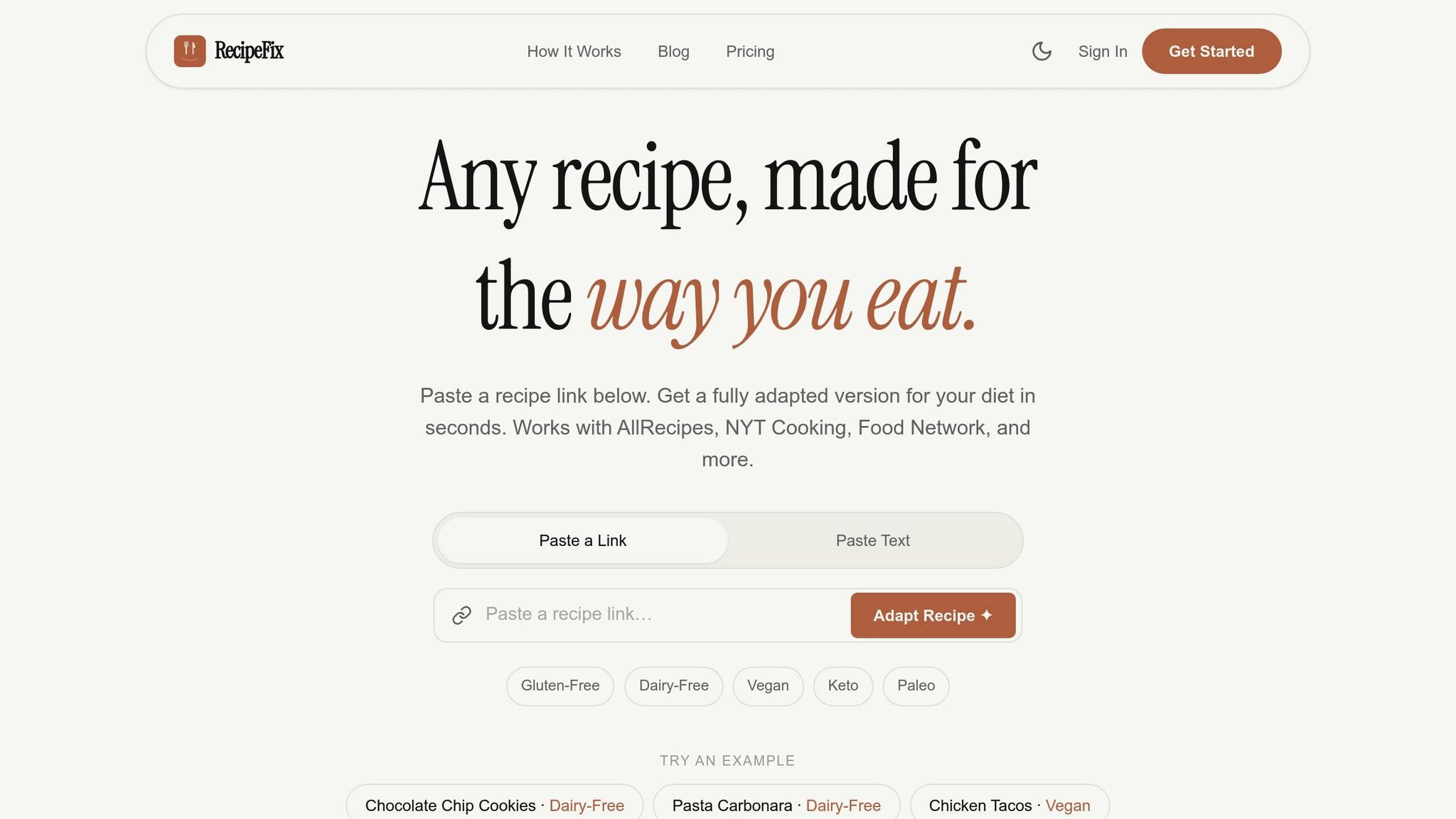
RecipeFix builds on these methods, offering a tool that simplifies recipe adaptation for diets like gluten-free, vegan, dairy-free, keto, and nut-free. Users can paste a recipe URL or input ingredients manually, select dietary preferences, and instantly receive a converted recipe with adjusted ingredients and instructions.
The platform also handles serving size adjustments, recalculating quantities whether you're cooking for two or twenty people. Once you're ready to cook, RecipeFix provides clear, step-by-step guidance to ensure smooth preparation. While basic features are free, the premium plan ($3.99/month or $27.99/year) unlocks advanced customization options.
This tool bridges the gap between manual recipe adaptation and modern convenience, ensuring dietary needs are met without sacrificing taste or nutrition.
AI Tool Limitations and Best Practices
While AI tools are efficient, they still need human oversight to ensure practical results. They excel at creating a "fast first draft" of a converted recipe, but they're not flawless. As Sarah Choi, a health writer, explains:
"For ingredient substitutions, ChatGPT is a great resource. Instead of looking up alternative ingredients, and then looking up the ratio, and then trying to find which would taste best, all of the information is combined in one place."
However, Dr. Lena Torres from Johns Hopkins University highlights some risks:
"An AI that replaces 'peanut butter' with 'sunflower seed butter' checks the box for peanuts - but doesn't assess whether the sunflower seeds were processed on shared lines with tree nuts... True intelligence requires layered clinical, manufacturing, and sensory data - not just recipe text"
To get the best outcomes, always review AI suggestions manually. Ensure that substitutions maintain the original ingredient's role. For instance, gluten-free baking often requires adding xanthan gum (about 1/4 teaspoon per cup of gluten-free flour) to restore elasticity - something AI might overlook. Testing a small portion can help verify texture and flavor. And always check ingredient labels for certifications like "Certified Gluten-Free" or "Top 8 Allergen-Free", as AI may miss processing details.
Maintaining Nutritional Balance in Adapted Recipes
When adjusting recipes, it’s not just about nailing the flavor or texture - keeping the nutritional value intact is just as important. Ingredient swaps can sometimes strip a dish of key nutrients, so it’s crucial to pick alternatives that offer similar benefits, whether that’s protein, healthy fats, fiber, or vitamins.
Identifying and Addressing Nutritional Gaps
The first step is understanding what each ingredient brings to the table. For instance, eggs contribute protein and structure, butter adds fat and moisture, and grains provide fiber and B-vitamins. If you’re swapping these out, the replacements should match their nutritional contributions.
Julia Zumpano, RD, LD from Cleveland Clinic, highlights the importance of mindful substitutions:
"Swapping ingredients such as refined grains, saturated fats and added sugars with healthy fats, veggies, legumes and natural sugars really does add up to less inflammation and reduced risk for heart disease, cancer, diabetes, obesity and mental disorders".
Nutritional gaps often crop up when entire food groups are removed. For example, dairy-free diets can lack calcium and vitamin D, so fortified plant-based milks are a smart choice. Vegan recipes might fall short on protein, but options like tofu, tempeh, lentils, or beans can fill the gap. Gluten-free recipes that rely on refined flour alternatives may lose fiber, so consider adding ground flaxseed or almond meal instead of white breadcrumbs.
Other common deficiencies can sneak in, too. Keto or paleo diets that reduce grains often lead to lower fiber intake. High-fiber swaps like riced cauliflower (around 25 calories per cup) or spiralized zucchini can help. If you’re adjusting protein sources, remember that grass-fed, pasture-raised meats contain 50% more omega-3 fatty acids compared to conventionally raised options.
Let’s look at how to not only maintain but also improve the nutritional value of your recipes through smart ingredient choices.
Adding Nutrient-Dense Ingredients
Instead of just removing less nutritious ingredients, think about how you can upgrade your recipe with healthier substitutes. For example, swap mayonnaise for mashed avocado or hummus to replace saturated fats with heart-friendly monounsaturated fats and fiber. In baking, Greek yogurt can replace oil on a 1:1 basis, cutting fat while adding protein.
For sweeteners, ditch refined sugar and go for mashed bananas or date paste. These alternatives not only provide natural sweetness but also add fiber, potassium, and antioxidants. When thickening soups, try pureed white beans or cauliflower to add fiber and vitamins without the extra calories from cornstarch.
Nutritional yeast is a great cheese substitute, offering B-vitamins and a savory, umami flavor without the saturated fat. Chia or flax seeds can replace eggs in baking while delivering omega-3 fatty acids and fiber. And if you’re using canned beans, give them a rinse - it can significantly cut down on sodium.
To maintain the balance of flavor and texture while improving nutrition, start small. Adjust only 25% of a core ingredient like fat, sugar, or flour. This way, you can enhance the recipe’s nutritional profile without compromising its taste or structure.
Converting Recipes with Multiple Dietary Restrictions
Making recipes work for multiple dietary restrictions - like gluten-free and vegan, or keto and dairy-free - can feel like solving a puzzle. The trick is to tackle one restriction at a time and focus on keeping the flavor and texture intact.
How to Prioritize Dietary Restrictions
When faced with multiple dietary needs, avoid the temptation to strip out every restricted ingredient all at once. Registered Dietitian Chelsey Amer advises:
"Don't try to make a recipe food allergy friendly, vegan, gluten free, salt-free, sugar-free, everything-free. It won't work (usually), right off the bat. Instead, choose 1 adaptation at a time."
Start by identifying the ingredient that’s most essential to the recipe's structure. In baking, for example, this might be the binding agent, like eggs. For soups or sauces, it could be the fat or thickener. Focus on one substitution at a time - like replacing eggs with flaxseed meal for a vegan option - before moving on to another, such as swapping regular flour for a gluten-free blend. This step-by-step method helps maintain the integrity of the dish.
It’s also easier to begin with recipes that align more closely with your dietary goals. For instance, a vegetable and bean chili is already gluten-free and vegan, so it requires fewer changes. On the other hand, heavily dependent dishes like mac and cheese, which rely on both dairy and gluten, might be better recreated from scratch rather than forcing multiple substitutions.
Simplifying Complex Conversions
For recipes that require significant changes, a few strategies can make the process smoother. Start by creating a flexible base that you can customize later. Recipe developer Jack Harland shares this insight:
"To make amazing sauces that are good for those on a diet, you need to know what each component does to the sauce and then figure out the best method to get that same impact without going overboard."
For example, begin with a neutral vegetable stock reduction. From there, you can add coconut milk or cashew cream for a vegan and dairy-free version, or use xanthan gum to thicken it for keto-friendly needs.
For gatherings with diverse dietary requirements, consider setting up build-your-own stations like taco bars or grain bowls. Recipe developer Zuzana Paar suggests starting with a safe base - like lettuce wraps or gluten-free tortillas - and offering a variety of toppings. Include separate proteins (like grilled chicken or black beans), fats (avocado or dairy-free cheese), and sauces so everyone can assemble a meal that works for them.
Keep track of what works. For instance, note that blending cashews with water at a 1:1.5 ratio creates a creamy, dairy-free sauce, or that adding a cornstarch slurry in the last 30–60 minutes of cooking can help maintain consistency. These notes will save you time and effort when adapting recipes in the future.
Conclusion
Transforming recipes to fit specific diets doesn’t have to feel overwhelming. The secret lies in understanding the role each ingredient plays - whether it’s for structure, moisture, or flavor - before making substitutions. As Registered Dietitian Chelsey Amer wisely says:
"Make FLAVOR your priority. No one wants a free-from... recipe devoid of deliciousness!"
Focusing on taste and texture while making thoughtful swaps ensures your dishes satisfy both your dietary needs and your taste buds.
Precision is especially important when adapting recipes. For instance, using weight measurements instead of volume can prevent texture issues, particularly in baking, where a cup of flour can vary by up to 20% depending on how it’s packed. Scaling recipes also requires care - seasonings don’t scale evenly, so starting with about 75% of the calculated amount and adjusting to taste is a safer bet. Similarly, when cooking larger batches in the oven, lowering the temperature by 25°F helps ensure even cooking. These small adjustments go a long way in maintaining both flavor and balance.
Smart tools like RecipeFix make the process even easier. These AI-powered platforms analyze recipes to suggest ingredient swaps that maintain the original texture and flavor while aligning with dietary preferences like Keto, Vegan, or Gluten-Free. They also handle complex tasks like scaling and unit conversions, update cooking instructions to reflect substitutions, and even prioritize ingredients you already have to help reduce waste.
Keeping track of successful adaptations can streamline future efforts. For example, swapping potatoes for cauliflower cuts carbs from 27g to just 5g per cup, and using less liquid in slow cooker recipes - about 25% to 50% less than stovetop versions - can make a big difference. Recording these insights builds a personal reference for future recipe adjustments.
With a mix of thoughtful substitutions and smart tools, you can confidently adapt any recipe to suit your dietary needs without sacrificing flavor or enjoyment.
FAQs
How do I know which ingredient swap will still work?
When deciding on an ingredient substitute, think about what the original ingredient brings to the recipe - like texture, flavor, or a specific function (such as binding or leavening). For instance, if you're swapping out cheese, consider whether the substitute needs to melt or spread. Keep in mind that substitutions can impact texture, cooking time, or flavor, especially in baking, where accurate ratios are key to getting the desired results.
What’s the fastest way to fix dry or crumbly gluten-free baking?
To fix dry or crumbly gluten-free baked goods, try increasing the moisture by adding 15–20% more liquid ingredients. This could include options like eggs, milk, water, applesauce, or yogurt. Another helpful tip is to lower the oven temperature slightly. Using flour blends that contain extra starches or binding agents, such as xanthan gum or psyllium husk, can also work wonders for improving texture and structure. These tweaks help lock in moisture and reduce crumbling.
Can AI conversions handle multiple dietary restrictions safely?
AI tools are capable of managing various dietary restrictions, but how well they perform depends on their level of sophistication. More advanced systems can recommend ingredient substitutions that preserve key elements like flavor, texture, and nutritional balance for diets such as gluten-free, vegan, or keto. That said, some tools might oversimplify these swaps, which can compromise either the quality or safety of the recipe. If you have severe allergies or follow strict dietary guidelines, it’s crucial to double-check AI-generated recipes to ensure they meet your specific needs.
Adapt a recipe free with RecipeFix → · Substitution guides with exact ratios