Home / Blog / 10 Common Dairy-Free Swaps for Everyday Cooking
10 Common Dairy-Free Swaps for Everyday Cooking
Practical dairy-free swaps that recreate creamy, cheesy, and baked favorites using plant-based milks, creams, butters, cheeses, and tofu.
10 Common Dairy-Free Swaps for Everyday Cooking
Switching to a dairy-free lifestyle is simpler than you might think. Whether you're avoiding dairy for health, allergies, or other reasons, there are plenty of substitutes that can seamlessly replace traditional dairy ingredients in your favorite recipes. Here are 10 practical swaps to try:
- Almond Milk: Great 1:1 replacement for cow's milk in both sweet and savory recipes. Works well in baking and cooking but may need a thickener for creamy dishes.
- Oat Milk: Creamier than almond milk and excellent for lattes, soups, and baked goods. Slightly sweet, so unsweetened versions are ideal for savory dishes.
- Coconut Milk: Perfect for heavy cream substitutes, especially in curries, desserts, and sauces. Use full-fat canned versions for the best results.
- Cashew Cream: A mild, creamy option for sour cream, cream cheese, or ricotta replacements. Easy to make at home by blending soaked cashews.
- Plant-Based Butter: Works 1:1 for cooking and baking. Options like Earth Balance or Miyoko’s mimic the taste and texture of dairy butter.
- Coconut Oil: Solid at room temperature, it's a versatile butter substitute with a neutral (refined) or coconut flavor (unrefined).
- Avocado: A whole-food alternative to butter in dense baked goods like brownies. Adds moisture and nutrients.
- Nutritional Yeast: A cheesy, nutty powder that replaces Parmesan. Sprinkle on pasta, popcorn, or mix into sauces.
- Tofu: Silken tofu is great for creamy dishes, while firm tofu can replace ricotta or feta in baked dishes or salads.
- Vegan Cheese: Shredded cheese alternatives like Violife or Daiya melt well and bring a cheesy finish to pizzas, tacos, and casseroles.
These swaps are widely available, easy to use, and often healthier than their dairy counterparts. With these options, you can enjoy creamy sauces, baked goods, and cheesy dishes - all without dairy.
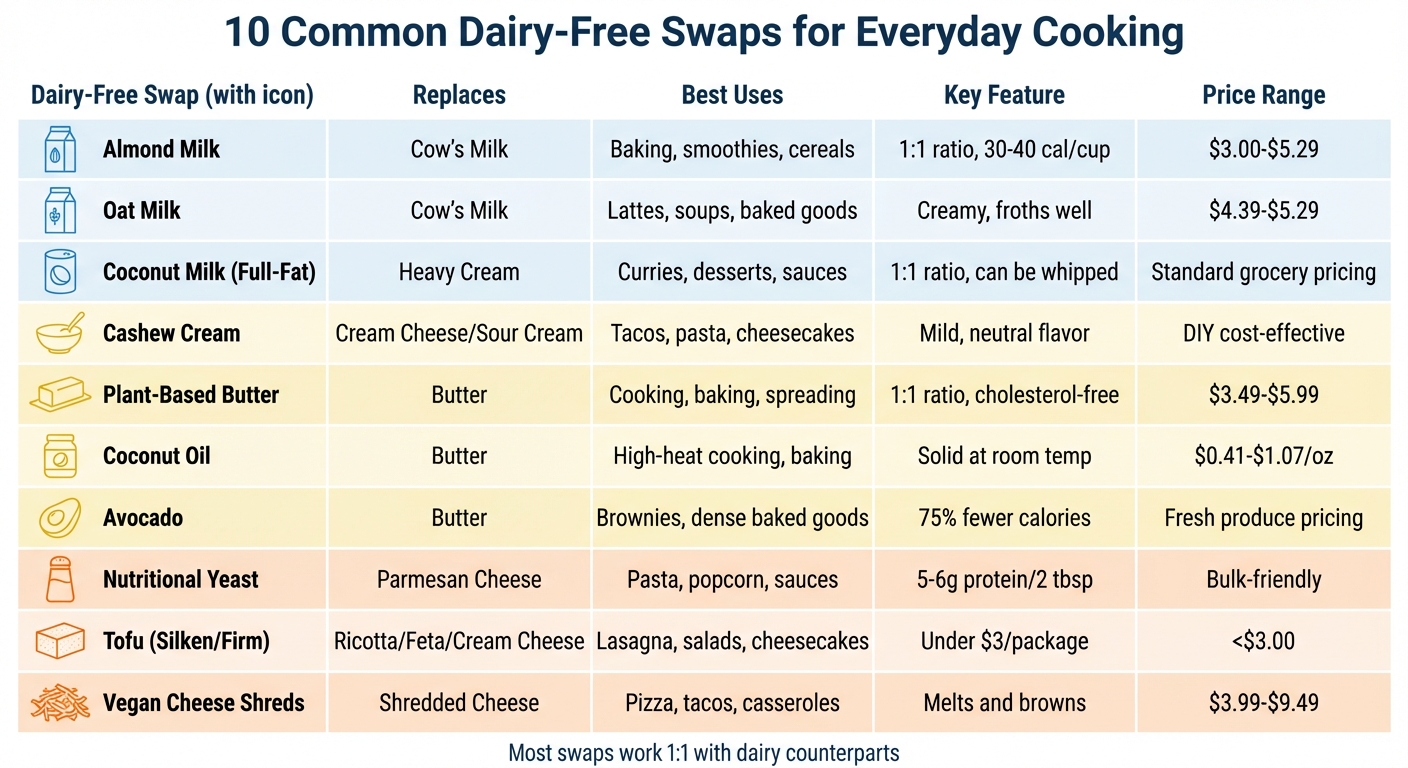
10 Dairy-Free Swaps for Everyday Cooking: Quick Reference Guide
10 Dairy Free Alternatives to Your Favorite Foods
1. Almond Milk for Cow's Milk
Almond milk is one of the easiest dairy-free substitutes you can use in the kitchen. It works as a one-to-one swap for cow's milk in almost any recipe, whether it's your morning cereal or a batch of muffins.
Flavor Compatibility with Recipes
With its mild, nutty flavor, almond milk pairs perfectly with smoothies, oatmeal, pancakes, waffles, and sweet treats like cakes and muffins. For savory dishes - such as soups, pasta sauces, or egg bakes - unsweetened almond milk is the way to go to avoid any flavor mismatches. Katherine Gillen, Former Senior Food Editor at PureWow, explains:
If you're looking for a one-to-one milk substitute that's also dairy-free, plain almond milk works just fine.
She also cautions:
It might add a slightly nutty flavor to your recipe. Make sure you choose an unsweetened almond milk, especially if it's going into a savory dish.
If you're replacing heavy cream, almond milk's thinner consistency may require a thickener like cornstarch or agar-agar to achieve the right texture. Its versatility makes it a handy option for both everyday cooking and baking.
Ease of Use in Cooking and Baking
For baking, refrigerated almond milk often delivers better results than shelf-stable versions. The refrigerated kind usually has fewer stabilizers, which can help maintain the desired texture in your recipes. Keep in mind that almond milk is much lighter than whole milk or cream - offering just 30–40 calories per cup, compared to the 800 calories found in a cup of heavy cream.
Availability and Affordability in the US
Almond milk is widely available and budget-friendly across the US. You can find it in nearly every grocery store, including Walmart, Target, Whole Foods, and Costco, with prices ranging from $3.00 to $5.29 depending on the brand.
Nutritional Value and Dietary Benefits
A cup of almond milk typically contains about 2.5 grams of fat, just 0.2 grams of saturated fat, and around 0.4 grams of fiber per tablespoon - something dairy cream lacks entirely. Many brands also fortify almond milk with calcium and Vitamin D, making it nutritionally closer to cow's milk. This makes it a great option for anyone dealing with lactose intolerance, dairy allergies, or simply aiming to cut down on saturated fat.
2. Oat Milk for Cow's Milk
Oat milk, much like almond milk, is a straightforward 1:1 substitute for cow’s milk in almost any recipe. Thanks to its creamy texture and similar thickness, it fits seamlessly into dishes ranging from baked goods to hearty soups. Let’s dive into why oat milk is such a popular dairy-free option.
Flavor Compatibility with Recipes
Oat milk has a mild, slightly sweet flavor that works well in both sweet and savory dishes. It’s a favorite for lattes and cappuccinos since it froths better than most plant-based alternatives. You’ll also find it performs beautifully in recipes like pancakes, French toast, smoothies, cakes, and muffins. For savory dishes - think mac and cheese, béchamel sauce, tomato soup, or mashed potatoes - unsweetened and unflavored oat milk is the way to go to avoid adding unnecessary sweetness.
As Muhammad Hasnain from Texas Real Food puts it:
"Oat milk's rise in popularity stems from its creamy texture and slight sweetness, which makes it a versatile dairy alternative for a variety of recipes."
Another bonus? Oat milk holds up well under heat, making it ideal for hot coffee, roux-based sauces, and stews without curdling.
Ease of Use in Cooking and Baking
Swapping oat milk for cow’s milk is as easy as using it cup-for-cup. For recipes that call for whole milk or cream, you can boost the richness by choosing an "extra-creamy" or full-fat oat milk. Alternatively, add a tablespoon of oil or plant-based butter per cup.
In baking, oat milk works especially well in cakes and custards, though its lower fat content may result in slightly less browning. To counter this, brush the tops of baked goods with a mix of oat milk and sugar before popping them in the oven. Need buttermilk? Just mix 1 teaspoon of white vinegar or lemon juice into 1 cup of oat milk and let it sit for a few minutes. Beyond its versatility, oat milk’s widespread availability makes it a convenient choice.
Availability and Affordability in the U.S.
Oat milk is easy to find in the U.S., available at stores like Whole Foods, Target, Costco, and most local grocery chains. Popular brands include Oatly Barista Edition (priced around $4.39), Califia Farms (about $5.29), and budget-friendly options like Whole Foods 365. If you use oat milk frequently, buying in bulk at warehouse clubs can help save money. For those with celiac disease, look for "certified gluten-free" labels, as oats are sometimes processed in facilities that handle wheat.
Nutritional Value and Dietary Benefits
One cup of oat milk typically contains 100–130 calories, 1–2 grams of fiber, and about 0.5 grams of saturated fat - far lower than the 3 grams found in dairy milk. Many brands also fortify their oat milk with calcium and potassium, making it nutritionally comparable to cow’s milk. It’s naturally free of nuts and soy, making it a safe option for individuals with multiple allergies.
3. Coconut Milk for Heavy Cream
If you're looking for a dairy-free heavy cream substitute, coconut milk is a fantastic option. Full-fat canned coconut milk works as a direct 1:1 replacement, providing the creamy texture and stability you need for both hot and cold dishes.
Flavor Compatibility with Recipes
Coconut milk brings a subtle, slightly sweet flavor with a hint of tropical notes, making it versatile for both savory and sweet recipes. It's a common ingredient in South Asian and East African cooking, where it stars in curries, soups, and sauces like Tikka Masala and vodka sauce. On the sweeter side, its natural sweetness pairs beautifully with coffee, smoothies, ganache, and buttercream. For recipes where the coconut flavor might feel too pronounced, you can balance it out with vanilla, citrus zest, or spices like cinnamon and cardamom.
Food scientist Jennifer Pallian highlights its versatility:
Coconut milk has a rich, creamy texture similar to heavy cream, making it an excellent dairy-free alternative... it can even be whipped to beautiful soft peaks, just like dairy cream.
This adaptability makes coconut milk a go-to choice for a wide range of dishes.
Ease of Use in Cooking and Baking
Using coconut milk in place of heavy cream is straightforward: simply substitute it on a 1:1 basis. For the creamiest results, avoid shaking the can - scoop out the solid cream from the top, which contains about 40g of fat per cup. If you're whipping it for a topping, refrigerate the can for at least 12 hours, then whip the chilled cream until soft peaks form. To prevent curdling or separation, add coconut milk toward the end of cooking when using high heat.
Nutritional Value and Dietary Benefits
Coconut milk offers a rich yet lighter alternative to heavy cream. A cup of canned coconut milk contains 45–50g of fat - approximately half the fat content of dairy heavy cream (88g) - while also providing extra fiber and protein. It's naturally dairy-free, lactose-free, and vegan, making it a great choice for individuals with dietary restrictions or allergies. Its high fat-to-carb ratio also makes it a keto-friendly option.
4. Cashew Cream for Cream Cheese or Sour Cream
Cashew cream is a fantastic alternative to traditional cream cheese and sour cream. Its mild flavor pairs perfectly with lemon juice or apple cider vinegar to create the tangy taste you’d expect from dairy-based versions.
Perfect for Sweet and Savory Recipes
Thanks to its neutral flavor, cashew cream works beautifully in a wide range of dishes. It’s just as at home in tacos, pasta sauces, and creamy soups as it is in cheesecakes, frostings, and fruit dips. Health educator Elaine from Eating by Elaine puts it best:
Cashew Cream is the holy grail of dairy-free cooking!
This versatility sets it apart from options like coconut cream, which often leaves a tropical aftertaste. Cashew cream, on the other hand, easily adapts to any flavor profile you need.
Simple to Make and Use
Creating cashew cream is straightforward. Start by soaking raw cashews - either overnight in cold water or for 30 minutes in boiling water. Once softened, drain them and blend with your liquid of choice, such as water or plant-based milk, until smooth. Adjust the liquid to achieve your desired texture: thicker for cream cheese or thinner for a heavy cream alternative. Store your cashew cream in an airtight container in the fridge, where it’ll stay fresh for up to five days.
Easy to Find and Budget-Friendly
Raw cashews are widely available in grocery stores across the U.S., making this a convenient option for most households. For cost savings, you can buy cashews in bulk from stores like Sprouts or Costco. Plus, making cashew cream at home is often cheaper than buying pre-made vegan cheese products, which typically cost between $5.99 and $8.99. As Stephani Jenkins from Kitchen Stewardship explains:
with just three ingredients that you can find in nearly any grocery store, you can whip up a creamy substitute for some of your favorite comfort foods.
Packed with Nutritional Benefits
A 1/4 cup of cashew cream contains about 243 calories, 20 grams of fat, and 6 grams of protein. Cashews are a great source of unsaturated fats, which may help lower cholesterol and reduce inflammation. They’re also loaded with essential nutrients like copper, magnesium, manganese, vitamin K, phosphorus, and zinc. As a cholesterol-free option, cashew cream delivers the creamy texture you crave while offering a boost of valuable nutrients. This makes it a flavorful and health-conscious choice for dairy-free cooking.
5. Plant-Based Butter for Butter
Plant-based butter is a dependable dairy-free alternative made from plant oils and natural flavors. It can replace dairy butter on a 1:1 basis in almost any recipe.
Flavor Compatibility with Recipes
Just like milk and cream substitutes, plant-based butter is a key swap for everyday cooking. The flavor varies by brand, so choosing the right one for your dish is essential.
Earth Balance is often considered the closest match to dairy butter, offering a creamy, versatile taste that works in everything from cookies to frosting. As Monique, Founder of Ambitious Kitchen, says about Miyoko’s Creamery:
Miyoko's offers a salted butter alternative that closely mimics the flavor of dairy butter.
For savory dishes like sautéed vegetables or sauces, Country Crock Plant Butter provides a richer flavor. Cultured options, such as Miyoko’s, have a mild tanginess, making them ideal for spreading on toast or crafting flaky biscuits. Keep in mind that many plant-based butters are saltier than unsalted dairy butter, so taste your dish before adding extra salt.
Ease of Use in Cooking and Baking
Plant-based butter works well in both cooking and baking. For baking, stick-form butters are the best choice. They hold their shape at room temperature and cream properly with sugar, unlike tub spreads that may melt too quickly. Earth Balance Buttery Sticks are great for pie crusts and cookies, while Miyoko's European-style cultured butter excels in frostings, incorporating air beautifully for a smooth texture.
For high-heat cooking, such as sautéing, Country Crock Plant Butter performs exceptionally well. Most brands handle everyday cooking tasks without any trouble, though some with lower melting points may liquefy faster.
Availability and Affordability in the US
Plant-based butters are easy to find in most U.S. grocery stores and are priced competitively. Here's a quick price breakdown:
- Country Crock Plant Butter: About $3.99 per pound
- Earth Balance: Around $4.29 for 15 oz
- Miyoko’s: Approximately $5.99 for an 8 oz block
- Flora: Starting at $3.49
These prices make plant-based butter comparable to - or only slightly more expensive than - traditional dairy butter.
Nutritional Value and Dietary Benefits
Plant-based butters are cholesterol-free and often contain less saturated fat than dairy butter, which has at least 7 grams of saturated fat per tablespoon. High-quality plant butters typically have 2 grams or less of saturated fat per tablespoon, though some coconut or palm oil-based options can reach up to 8 grams. Calorie-wise, most options range between 60 and 100 calories per tablespoon, similar to traditional butter.
Common base ingredients include coconut oil, avocado oil, cashews, and palm oil. Some brands, like Milkadamia, use macadamia nut oil for a rich, creamy texture. If you have nut allergies, always check the label, as many premium options include nut-based ingredients.
sbb-itb-ac3a9b8
6. Coconut Oil for Butter
Coconut oil is a flexible, dairy-free alternative to butter, working as a 1:1 substitute in most recipes. Unlike plant-based butters that need refrigeration, coconut oil stays solid at room temperature, making it easy to store in your pantry.
Flavor Compatibility with Recipes
The flavor of coconut oil depends on whether you choose refined or unrefined. Refined coconut oil has a neutral taste, so it won’t interfere with the flavors in savory dishes, pie crusts, or classic cakes. Unrefined (virgin) coconut oil, however, has a distinct coconut aroma and a sweet flavor, which shines in tropical desserts, granola, and certain muffins. Elaine, Founder of Eating by Elaine, shares:
I also use coconut oil as a vegan butter swap in most of my baking recipes.
For high-heat cooking or recipes where a coconut flavor might not fit, refined coconut oil is the better choice. On the other hand, unrefined oil adds a layer of complexity to dishes that naturally complement its tropical notes, making it a thoughtful option for balancing flavors.
Ease of Use in Cooking and Baking
Coconut oil can replace butter on a 1:1 basis in most recipes. For flaky pie crusts and biscuits, use solid or semi-solid coconut oil. In cookies, reduce the amount to 50% of the butter called for and add 2 tablespoons of liquid. For delicate cakes, decrease the coconut oil by about 3 tablespoons per cup of butter and add 1–3 tablespoons of liquid. This adjustment helps replicate butter’s balance of 80% fat and 20% water.
Availability and Affordability in the US
Coconut oil is easy to find at health food stores, major grocery outlets, and online platforms. Pricing varies based on type and brand. Refined butter-flavored coconut oil costs about $0.41 per ounce (e.g.,