Home / Blog / Gluten-Free Flour Substitutes: Which One to Use for Every Recipe
Gluten-Free Flour Substitutes: Which One to Use for Every Recipe
Compare rice, almond, oat, tapioca and 1:1 blends with clear tips on best uses, substitutions, and xanthan gum for reliable gluten-free baking.
Gluten-Free Flour Substitutes: Which One to Use for Every Recipe
When switching to gluten-free baking, picking the right flour is key. Each gluten-free flour behaves differently, so understanding their strengths and limitations can save you from trial and error. Here’s a quick guide to help you choose:
- Rice Flour: Great for muffins, cookies, and light cakes. Works best in blends to avoid grittiness. Add xanthan gum for structure.
- Almond Flour: Ideal for moist cakes, brownies, and cookies. No xanthan gum usually needed. Avoid for yeast breads.
- Oat Flour: Perfect for pancakes, muffins, and quick breads. Absorbs more liquid, so adjust accordingly. Certified gluten-free oats are a must.
- Tapioca Flour: Adds chewiness and flexibility. Best for pizza crusts, tortillas, and sauces. Combine with other flours for balance.
- 1:1 Gluten-Free Blends: Easiest option for beginners. Works well for cookies, cakes, and muffins but not for yeast breads.
Quick Comparison
| Flour | Best For | Key Adjustments | Xanthan Gum Needed? |
|---|---|---|---|
| Rice Flour | Muffins, cookies, cakes | Use in blends to avoid grittiness | Yes, 1 tsp per cup |
| Almond Flour | Cakes, brownies, cookies | Adjust for density with extra egg | Rarely, unless extra structure is needed |
| Oat Flour | Pancakes, muffins, breads | Add liquid or pair with leavening agents | Yes, 1 tsp per cup in blends |
| Tapioca Flour | Pizza crusts, tortillas | Use as part of a blend | Sometimes, for added structure |
| 1:1 Blends | Cookies, cakes, muffins | Check if xanthan gum is pre-included | Usually pre-included |
Choosing the right gluten-free flour depends on the recipe. For foolproof results, consider blends or tools like RecipeFix to simplify conversions.
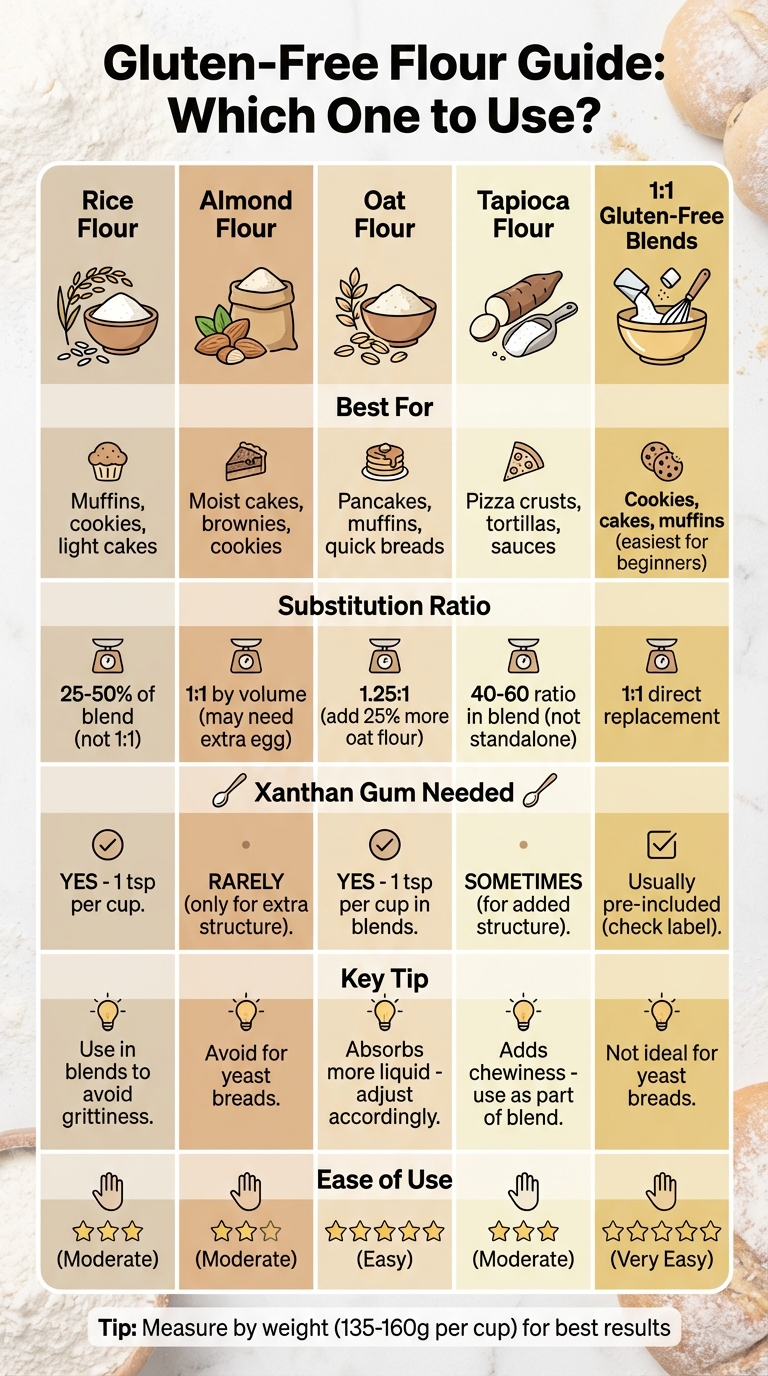
Gluten-Free Flour Comparison Chart: Best Uses and Substitution Ratios
Gluten-Free Flour Alternatives
sbb-itb-ac3a9b8
1. Rice Flour
Rice flour comes in three main types: brown, white, and sweet white (also called mochiko), each suited for different gluten-free recipes. Brown rice flour has a nutty flavor and a texture close to wheat flour, making it a great choice for muffins, cookies, and yeast breads. White rice flour, on the other hand, has a neutral taste and works well as a thickener in dishes like sauces, gravies, and roux, or as a base for all-purpose gluten-free flour blends. Lastly, sweet white rice flour is high in starch, which helps retain moisture and acts as a binder, making it ideal for soft, delicate cakes like Bundt or coconut cakes.
Best Use Case
- Brown rice flour: Best for structured baked goods like cookies, muffins, and yeast breads.
- White rice flour: Perfect for smooth thickeners or as part of a gluten-free flour mix.
- Sweet white rice flour: Great for light, moist cakes.
Substitution Ratio
Rice flour isn’t typically a direct 1:1 replacement for wheat flour, as it can create a gritty texture if used alone. Instead, it works best when it makes up 25%–50% of a gluten-free flour blend. A common approach is the "1-1-1 method", which combines equal parts rice flour, oat flour, and tapioca starch. For precision, keep in mind that 1 cup of rice flour weighs between 135–160 grams.
Xanthan Gum Requirement
When using rice flour, you’ll need to add xanthan gum to mimic the binding properties of gluten. Use 1 teaspoon of xanthan gum per cup of rice flour blend, unless your blend already includes it (check the label). This is especially important for yeast breads, where xanthan gum helps trap carbon dioxide, allowing the dough to rise properly.
Next, we’ll dive into almond flour and how it plays a unique role in gluten-free baking.
2. Almond Flour
Almond flour adds moisture, richness, and a gentle nutty flavor to gluten-free baking, making it perfect for tender cakes, fudgy brownies, and soft cookies. With its high protein (about 21.4%) and fiber content (10.7%), it helps prevent over-mixing and creates a satisfying texture. It's a favorite for those on grain-free, Paleo, or Keto diets. However, it doesn't work well for yeast breads or rolls due to its lack of gluten, which is essential for structural strength.
Best Use Case
Almond flour shines in recipes where a moist, rich texture is key. It’s ideal for butter cakes, pound cakes, chocolate chip cookies, shortbread, macarons, and brownies. Beyond sweets, it makes an excellent gluten-free breading for chicken or fish and adds flavor to savory crackers. For a smooth texture in pale cakes or macarons, use blanched almond flour (made without the skins). For recipes like crumbles or hearty cookies, almond meal (which includes the skins) offers a more rustic finish.
"Try baking up treats using only almond flour, and you'll be rewarded with super-tender and moist cakes, pleasantly short shortbread, and soft, fudgy brownies ... all of them gluten-free." - Samantha Seneviratne, Author
Substitution Ratio
Almond flour can often be substituted at a 1:1 ratio by volume, but its density and moisture content may require adjustments. Adding an extra egg or a binding agent like flaxseeds helps maintain structure. For standard recipes, replacing up to 25% of wheat flour with almond flour is usually best to avoid a dense, compact result. Sifting the flour beforehand helps remove clumps, and keeping an eye on baking times is important since almond flour browns faster than wheat flour.
Xanthan Gum Requirement
In most cases, xanthan gum isn’t necessary when using almond flour. Its natural fat and protein content provide enough structure for cakes and cookies. However, for recipes requiring extra lift or stability - like certain breads or delicate cakes - adding about 1/4 teaspoon of xanthan gum per cup of flour can help prevent crumbling. To keep almond flour fresh and avoid rancidity, store it in the freezer.
Up next, we’ll see how oat flour stacks up in gluten-free recipes.
3. Oat Flour
Oat flour brings a mild sweetness and soft texture, making it perfect for pancakes, muffins, cookies, and quick breads. It’s also a nutritional powerhouse, offering soluble fiber, protein, vitamin B1, magnesium, and iron. Its comforting flavor works well in both sweet and savory recipes. To ensure it’s safe for gluten-free diets, always choose certified gluten-free oat flour to avoid cross-contamination.
Best Use Case
Oat flour shines in recipes that need a tender crumb and a light, fluffy texture. Think pancakes, waffles, muffins, cookies, and even some yeast breads when combined with binders . However, it’s best to avoid sticky ingredients like mashed bananas, as they can make the batter overly gummy. For the best results, pair oat flour with a leavening agent like baking powder to create that airy, delicate finish.
Substitution Ratio
Since oat flour is lighter and more absorbent than wheat flour, a direct 1:1 swap can lead to texture issues. To adjust, add about 25% more oat flour (roughly 1/4 cup extra per cup) or weigh it for precise measurements. In many recipes, you can replace up to 50% of the wheat flour with oat flour without compromising the structure. To enhance binding and prevent crumbling, try adding 1 tablespoon of cornstarch, tapioca starch, or ground flaxseed per cup of oat flour. These tweaks help maintain the right balance of moisture and structure.
Xanthan Gum Requirement
When using oat flour as part of a gluten-free mix to replace wheat flour, xanthan gum is essential for structure. Add 1 teaspoon per cup for yeast breads to help the dough trap carbon dioxide and rise properly . Also, because oat flour absorbs liquid readily, you may need to increase the liquid in your recipe. Opting for milk or buttermilk instead of water can help keep your baked goods moist.
Next, let’s dive into how tapioca flour brings lightness and chewiness to gluten-free recipes.
4. Tapioca Flour
Tapioca flour, derived from the cassava root, is a game-changer for gluten-free baking. This fine, white powder is known for its ability to mimic gluten's elasticity, adding chewiness and flexibility to recipes. Nicole Hunn, a gluten-free baking expert, highlights its unique properties:
"Tapioca starch behaves quite differently than other starches in baking, since it gives baked goods a stretchy, chewy quality that is very hard to duplicate with any other single ingredient."
Best Use Case
Tapioca flour shines in recipes where texture is a priority. For pizza crusts and bagels, it creates a satisfying chew and stretch . In cookies, it helps achieve that perfect balance of crisp edges and a chewy center, while in cakes, it contributes to a soft, airy crumb. Its flexibility makes it an excellent choice for wraps and tortillas, allowing them to fold easily without tearing . Beyond baked goods, tapioca flour is incredibly versatile - it works as a thickener for sauces and soups, delivering a glossy, translucent finish without altering the flavor . It’s also a fantastic coating for fried foods, creating a crispy, light exterior.
Substitution Ratio
Tapioca flour isn't a direct 1:1 substitute for wheat flour. Instead, use it as part of a blend. A good rule of thumb is the 40-60 ratio: combine 40% whole grain flour (like sorghum) with 60% starch (such as tapioca). Alternatively, mix equal parts tapioca starch, oat flour, and rice flour for a balanced blend. Because tapioca flour is very fine, it’s best to measure it by weight - 1 cup typically equals about 135 grams. For thickening purposes, tapioca flour can replace cornstarch at a 1:1 ratio.
Xanthan Gum Requirement
Although tapioca flour naturally acts as a binder, recipes like yeast breads or those requiring extra structure benefit from xanthan gum. Add 1 teaspoon of xanthan gum per cup of your gluten-free flour blend to trap carbon dioxide and improve texture . Research from Kasetsart University shows that incorporating 0.50% xanthan gum into tapioca starch gels significantly reduces starch retrogradation, preventing an unpleasant spongy texture in frozen foods. Using the right amount ensures proper dough expansion and a consistent crumb.
5. 1:1 Gluten-Free Blends
If working with individual gluten-free flours feels overwhelming, 1:1 blends provide a straightforward alternative for adapting recipes without the need for complex tweaks.
These blends, often called "Measure for Measure" flours, are perfect for beginners. They replace all-purpose wheat flour in recipes without requiring additional adjustments. Unlike single-ingredient flours that might need extra ingredients or steps to work properly, these blends combine several components to mimic the stretch, lightness, and neutral flavor of wheat.
Best Use Case
1:1 blends shine in non-yeasted recipes like cookies, muffins, cakes, brownies, pancakes, and quick breads. They work particularly well in recipes with wet batters where flour isn’t the main structural element - think fudgy brownies or angel food cake. As the Bon Appétit Test Kitchen notes:
"As a general rule, any wet, sugary batter with less flour can take a gluten-free blend and leave no one the wiser."
However, steer clear of using these blends in traditional yeast breads. For recipes involving yeast, you’ll need a specialized gluten-free bread flour or a recipe specifically designed for such blends.
Substitution Ratio
You can substitute 1 cup of wheat flour with 1 cup of a 1:1 gluten-free blend. For the best results, measure by weight. Depending on the brand, 1 cup of blend typically weighs between 135 and 160 grams .
Since gluten-free flours absorb more liquid than wheat flour, you may need to add an extra egg or increase the liquid in your recipe to avoid dryness. Letting batters rest for 10–30 minutes before baking allows the starches to fully hydrate, reducing any gritty texture. For cookie dough, chilling it overnight can also help eliminate a sandy feel.
Xanthan Gum Requirement
Most 1:1 blends already include xanthan gum, but if yours doesn’t, add 1/4 to 1/2 teaspoon per cup of flour. Be sure to check the ingredient list to avoid adding extra xanthan gum unnecessarily. As Rossi Anastopoulo from King Arthur Baking explains:
"Gluten-free replacement flours are designed to be substituted directly for all-purpose flour or similar flours in a recipe, with little to no adjustments necessary."
This simplicity makes 1:1 blends a reliable option for gluten-free baking, and tools like RecipeFix can even automate the conversion process for you.
Pros and Cons
Here's a breakdown of the strengths and challenges of different gluten-free flours, along with a handy table for quick reference.
Rice flour is a dependable choice for adding structure without overshadowing other flavors. However, using it alone can sometimes lead to a gritty texture, especially in delicate baked goods .
Almond flour is known for producing moist, flavorful results. Its high protein (about 21.4%) and fiber (around 10.7%) content contribute to tender textures. That said, its heaviness makes it less suitable for yeast-based breads .
Oat flour offers a mild sweetness and can be easily made at home by grinding rolled oats. However, it can result in dense or gummy textures if not paired with the right leavening agents. As a general rule, you'll need about 1.25 cups of oat flour to replace 1 cup of wheat flour .
Tapioca flour excels at adding stretch, chewiness, and crispness, making it perfect for pizza crusts or thin cookies. Its neutral flavor also aids in browning. Be cautious, though - too much can lead to a chalky aftertaste or overly sticky consistency .
1:1 gluten-free blends are designed for easy substitution in recipes that don’t rely on yeast. As Rossi Anastopoulo from King Arthur Baking explains:
"Gluten-free Measure for Measure Flour is the easiest way to make any non-yeasted recipe gluten-free".
These blends strike a good balance in flavor and texture but may fall short in yeast-based recipes unless specifically tailored for that purpose .
| Flour Type | Main Strengths | Main Weaknesses | Ease of Use |
|---|---|---|---|
| Rice Flour | Adds structure; good base | Gritty when used alone | Moderate |
| Almond Flour | Moist texture; nutrient-rich | Too heavy for yeast breads | Moderate |
| Oat Flour | Mildly sweet; DIY-friendly | Can be dense or gummy | Easy |
| Tapioca Flour | Adds chew and crispness | Chalky or sticky in excess | Moderate |
| 1:1 Blends | Simple, direct swaps | Limited for yeast recipes | Very Easy |
This overview can help you choose the right flour for your baking needs. For specific recipe conversions, refer to the detailed table below.
Quick Reference Table: Recipe Type to Flour Match
Here’s a handy table to help you match gluten-free flours to various recipes. Use it to simplify your conversions and ensure great results in your gluten-free baking.
| Recipe Type | Best Flour(s) | Substitution Ratio (GF to Wheat) | Xanthan Gum Notes |
|---|---|---|---|
| Yeast Bread | Sorghum, Buckwheat, Teff, Oat | 1:1 (as part of a blend) | Essential; add about 1 tsp per cup of flour |
| Cookies | Almond, Oat, Sorghum, 1:1 Blend | 1:1 | Often included in 1:1 blends; add 1/4 tsp per cup if using single flours |
| Cakes | Rice Flour, Sorghum, Coconut, 1:1 Blend | Rice 3/4:1; Coconut 1/4:1; Blend 1:1 | Recommended for structure in lighter cakes |
| Muffins | Millet, Oat, Almond, 1:1 Blend | 1:1 (Blend) or 1.25:1 (Oat) | Frequently included in blends; helps prevent crumbling |
| Pancakes & Waffles | Buckwheat, Oat, Sorghum | 1:1 to 1.25:1 | Minimal needed; eggs provide enough binding |
| Pie Crust | Millet, Teff, Almond, Sorghum | 1:1 (as part of a blend) | Use ground flax or chia for better pliability |
| Pizza Crust | Tapioca, Buckwheat, GF Pizza Flour | 1:1 (specialty flour) | Essential for chewiness and oven spring |
| Brownies | 1:1 Blend, Teff, Almond | 1:1 | Swap is barely noticeable in fudgy textures |
| Sauces & Thickening | Tapioca, Arrowroot, Rice | 1:1 (Rice); 2:1 (Tapioca for cornstarch) | Not required for thickening |
| Tortillas | Cassava, Almond | 1:1 | Cassava provides natural stickiness |
Key Tips:
- Check your 1:1 blend: Many already include xanthan gum - adding more can make your dish gummy.
- Coconut flour absorbs more liquid: You’ll need extra liquid or eggs when using it.
- Weigh your flour: Use 135g per cup for consistent results across different flours.
For in-depth details on each flour type, refer to earlier sections. Or, let RecipeFix handle the hard work - just paste your recipe, click "gluten-free", and get precise, tailored conversions for your dish.
Conclusion
Picking the right gluten-free flour isn’t about finding a universal replacement - it’s about choosing what works best for your specific recipe. As Kathlena Rails, The Allergy Chef, explains:
"There isn't one gluten-free flour that can fully replace wheat... it's essential to blend multiple ingredients."
For cookies and cakes, 1:1 replacement blends or almond flour often yield the best results. Yeasted breads, on the other hand, require specialized gluten-free bread flours with added binders. Oat flour shines in pancakes, while starches like tapioca or arrowroot are ideal for creating smooth, silky sauces.
The reference table above can serve as a helpful starting point, but don’t hesitate to tweak your substitutions to get the texture and flavor you’re aiming for. Matching your flour choice to the recipe’s needs is the key to consistent and delicious gluten-free baking.
Feeling overwhelmed by the trial-and-error process? That’s where RecipeFix can help. Simply paste your recipe, select "gluten-free", and the tool calculates the perfect flour blend, ratios, and whether you need xanthan gum. Whether you’re recreating Grandma’s chocolate chip cookies or tackling pizza dough, the right flour makes all the difference.
For more tips and guidance on gluten-free cooking, explore our complete guide to gluten-free recipes. Ready to transform your recipes? Try RecipeFix for free today!
FAQs
Why did my gluten-free bake turn out gritty or sandy?
A gritty or sandy texture in gluten-free baked goods often stems from either a lack of moisture and fats or the use of coarse flours that haven’t had enough time to hydrate. To fix this, let your flour hydrate properly before baking. You can also mix finer flours and make sure your recipe has the right balance of liquids and fats for a smoother, more enjoyable texture.
How do I know when to add xanthan gum (and how much)?
If your gluten-free flour blend lacks a binding agent, consider adding xanthan gum. Use 1 teaspoon per cup of flour to mimic the structure and elasticity that gluten provides. To get the best results, mix the xanthan gum into the flour at the beginning. This ensures it’s evenly distributed, improving both the texture and binding of your baked goods.
What’s the best flour swap for yeast bread vs. quick bread?
When making yeast bread, opt for a gluten-free flour blend that includes xanthan gum. This ingredient is key for providing the structure and elasticity needed to replicate the texture of wheat-based bread. These blends pair well with yeast, ensuring a proper rise and satisfying texture.
For quick bread, flours like rice, almond, or oat flour are ideal. Since these recipes don’t use yeast, they depend on baking powder or baking soda for leavening, allowing you to skip the rising time entirely.
Adapt a recipe free with RecipeFix → · Substitution guides with exact ratios