Home / Blog / How to Make Any Pasta Recipe Gluten-Free (Without Ruining the Texture)
How to Make Any Pasta Recipe Gluten-Free (Without Ruining the Texture)
Choose the right pastas and flour blends, cook precisely, and swap thickeners to make gluten-free pasta with great texture and flavor.
How to Make Any Pasta Recipe Gluten-Free (Without Ruining the Texture)
Gluten-free pasta can be tricky - texture, taste, and cooking times vary widely. But with the right techniques and ingredients, you can make pasta dishes that satisfy like wheat-based ones. Here's what you need to know:
Choose the right pasta: Rice and corn blends mimic wheat pasta best. Brands like Rummo and Jovial deliver reliable taste and texture.
Cook carefully: Gluten-free pasta cooks fast and releases more starch. Use plenty of water, stir frequently, and test early to avoid mushiness.
Make your own pasta: Use a blend of flours (60% grain, 30% starch, 10% protein) with binders like xanthan gum for elasticity.
Perfect your sauces: Avoid gluten thickeners; cornstarch, arrowroot, or rice flour work well. Check labels on condiments for hidden gluten.
Pair pasta shapes with sauces: Long noodles suit light sauces, while sturdy shapes hold chunky or creamy ones.
For best results, cook pasta in broth or finish it in the sauce for added flavor. Toss it with oil or sauce immediately after draining to prevent clumping. Gluten-free pasta requires attention, but these tips make it easy to enjoy delicious, satisfying meals.
Homemade GLUTEN FREE PASTA Recipe 𑗅 Easy, Tender Egg Noodles
Selecting Gluten-Free Pasta and Flour Substitutes
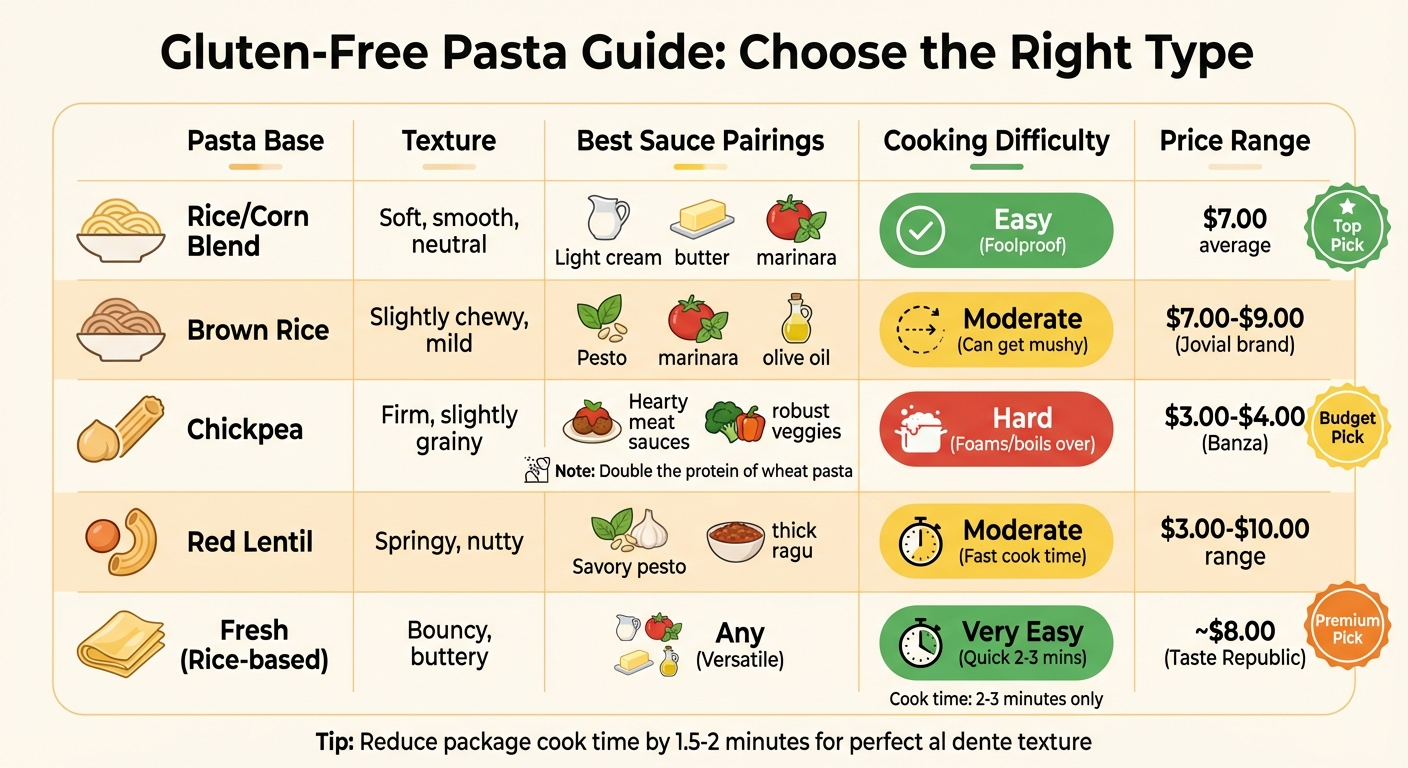
Gluten-Free Pasta Types: Texture, Sauce Pairings, and Cooking Difficulty Comparison
When it comes to gluten-free pasta, rice and corn blends are often the closest match to traditional wheat pasta in both taste and texture. Among these, Rummo stands out for its consistent texture, making it a favorite for home cooks. For those who enjoy fresh pasta, brands like Taste Republic (around $8.00 per container) offer a rich, springy texture and cook quickly and reliably.
Price and sauce compatibility are key factors to consider. Most gluten-free pasta ranges from $3.00 to
0.00 per box, with the average hovering around $7.00. Jovial's brown rice pasta, priced between $7.00 and $9.00, is a popular choice among gluten-free enthusiasts. Michelle Price from Honest and Truly shares her thoughts:
"Jovial is my favorite gluten-free pasta. It is the one that I've found most resembles traditional Italian semolina pasta when you cook it both in terms of taste and texture."
If you're looking for a budget-friendly option, Banza chickpea pasta ($3.00–$4.00) is a great pick. It offers nearly double the protein of wheat pasta, though its earthy taste pairs better with bold, hearty sauces than with lighter ones.
Store-Bought Gluten-Free Pasta: What to Know
The base ingredient of gluten-free pasta significantly influences its flavor, texture, and cooking behavior. Rice and corn blends provide a neutral taste and soft texture, making them versatile enough for everything from light cream sauces to marinara. On the other hand, chickpea and lentil pastas have stronger, nuttier flavors that pair better with rich, robust sauces like Bolognese. However, these types tend to foam while cooking, so you'll need to keep an eye on the pot.
Pasta Base
Texture
Best Sauce Pairings
Cooking Difficulty
Rice/Corn Blend
Soft, smooth, neutral
Light cream, butter, marinara
Easy (Foolproof)
Brown Rice
Slightly chewy, mild
Pesto, marinara, olive oil
Moderate (Can get mushy)
Chickpea
Firm, slightly grainy
Hearty meat sauces, robust veggies
Hard (Foams/boils over)
Red Lentil
Springy, nutty
Savory pesto, thick ragu
Moderate (Fast cook time)
Fresh (Rice-based)
Bouncy, buttery
Any (Versatile)
Very Easy (Quick 2–3 mins)
Fresh pasta cooks in just 2–3 minutes, while dried varieties require closer attention. To achieve the ideal al dente texture, reduce the cook time by about 1.5 to 2 minutes from the package instructions. Stir the pasta immediately after adding it to boiling water, as the high starch content can cause clumping.
If none of the store-bought options meet your expectations, making your own gluten-free flour blend gives you complete control over texture and flavor.
Making Your Own Gluten-Free Flour Blends
Homemade gluten-free pasta allows for customization, but getting the right mix is essential. A good starting point is a blend of 60% grain flour, 30% starch, and 10% protein flour. To ensure elasticity, add 1 teaspoon of xanthan gum per cup of flour. For example, brown rice flour provides structure, tapioca starch adds chewiness, and chickpea flour increases protein content. Chef Gianba Vinzoni, owner of Cinque Terre West, highlights the importance of binders:
"Gluten-free flours have different textures and when you add water to them, they break. So you need a binder like xanthan gum, which acts as the 'gluten' part, helping the dough stretch."
Gluten-free pasta dough typically requires more moisture than traditional dough. Most recipes call for 4 to 5 eggs per pound of pasta, plus a tablespoon of olive oil to keep the dough pliable. After kneading for 3–5 minutes, let the dough rest for at least 30 minutes. This resting period hydrates the dough, making it easier to roll and less likely to tear during shaping.
If xanthan gum isn't an option, psyllium husk powder works as a substitute - just use twice the amount. Tapioca starch is ideal for achieving a chewy texture, while potato starch creates a lighter, fluffier dough that’s better for delicate pasta shapes. When working with gluten-free dough, generously dust your surface with rice flour to prevent sticking, as this type of dough tends to be much tackier than wheat-based dough.
Cooking Techniques for Better Gluten-Free Pasta
How to Prepare and Cook Gluten-Free Pasta
Getting gluten-free pasta just right is all about timing. Unlike traditional wheat pasta, gluten-free varieties have a much smaller window between perfectly al dente and overcooked. Precision is everything.
Start with a large pot and plenty of water - about 4 to 6 quarts per pound of pasta. Gluten-free noodles release more starch, so having enough water prevents them from clumping into a sticky mess. Add 1 to 1.5 tablespoons of salt to the water before it boils to season the pasta properly.
When the water reaches a boil, reduce the heat to a simmer. Cookbook author Pamela Salzman explains why this step is crucial:
"Rapid boiling is what causes the pasta to lose its shape... Lower the heat so that the water simmers, and is not raging boiling."
Once you add the pasta, stir immediately and continue stirring every 30 seconds for the first five minutes. This prevents the noodles from sticking together. Start testing the pasta for doneness about a minute or two before the minimum cooking time suggested on the package. Look for even coloring with no darker spots in the center. Before draining, save about 1 cup of the starchy cooking water - it’s perfect for adjusting your sauce later.
When the pasta is cooked, stop it from overcooking by cooling it down right away.
After Cooking: Maintaining the Right Texture
To keep your pasta's texture just right, you’ll need to cool it quickly. Even after draining, the heat can continue cooking the noodles. An ice-water bath is the solution. Sandi Gaertner, Founder of Fearless Dining, highlights its importance:
"The secret to firm pasta starts with an ice-water bath. This halts the cooking process immediately, so the pasta doesn't continue to cook in the colander."
After cooling, drain the pasta gently. Avoid shaking the colander too much, as gluten-free noodles are more delicate and prone to breaking. For long noodles like spaghetti, use rubber tongs to carefully lift sections out of the water instead of dumping everything at once.
Once drained, toss the pasta with sauce or olive oil right away. Gluten-free noodles dry out and clump more quickly than their wheat-based counterparts. If your sauce feels too thick, add the reserved pasta water a tablespoon at a time until it reaches the desired consistency. For an even better result, transfer slightly undercooked pasta directly into the sauce and let it simmer for 1 to 2 minutes. This final step allows the noodles to absorb flavor while firming up their texture, making the dish even more satisfying.
sbb-itb-ac3a9b8
Making Sauces Gluten-Free
Identifying and Replacing Problem Ingredients
Creating a gluten-free sauce that pairs well with pasta while keeping its flavor and texture intact can be tricky. Many sauces hide gluten in their thickeners, with wheat flour being a common offender. It's often used in a roux (a mix of fat and flour) or a beurre manié (a butter and flour paste) to give sauces their body. Beyond flour, you’ll also find gluten lurking in everyday condiments like soy sauce, Worcestershire sauce, and oyster sauce, which frequently include wheat or barley.
Even seemingly safe ingredients, like crushed tomatoes, can pose a risk due to added stabilizers or potential cross-contamination. To avoid surprises, always choose products labeled "Gluten-Free".
If you need to thicken your sauce, there are plenty of gluten-free alternatives to wheat flour. Cornstarch works great for gravies and clear sauces, delivering a glossy finish. For acidic sauces that contain lemon juice or vinegar, arrowroot powder holds up well without breaking down. Rice flour is another excellent option for making a roux - it behaves much like wheat flour but requires an extra 2–3 minutes of cooking to remove any gritty texture. For red sauces, you can skip flour entirely by adding a few tablespoons of tomato paste to achieve a thicker consistency.
A helpful tip: mix equal parts starch and cold liquid to form a slurry before adding it to your sauce near the end of cooking. This prevents clumping. Just keep in mind that both cornstarch and arrowroot lose their thickening power if boiled for too long. With these swaps, adjusting your sauce to be gluten-free is almost as simple as cooking the pasta itself.
Using RecipeFix for Gluten-Free Recipe Conversions
Navigating multiple gluten-free substitutions in sauces can feel overwhelming, but RecipeFix makes the process much easier. This tool automatically detects hidden gluten and suggests replacements, saving you from tedious ingredient checks. Simply input any pasta recipe into RecipeFix, select "gluten-free" as your dietary preference, and it highlights problematic ingredients while offering suitable alternatives.
The platform works seamlessly with recipes from popular cooking websites or text you enter manually. It even adjusts ingredient quantities when you modify serving sizes - a handy feature since gluten-free pasta packages often come in 12-ounce portions instead of the standard 16 ounces. Converted recipes include clear, step-by-step instructions, complete with timers and checklists. While basic features are free, you can unlock premium customization options for just $3.99 per month.
Tips for Different Pasta Shapes and Cooking Methods
Pairing Pasta Shapes with the Right Sauces
Matching the right gluten-free pasta shape with its sauce can make or break a dish. Long, thin strands like spaghetti or linguine pair beautifully with light, smooth sauces. Think simple tomato, olive oil, or butter-based sauces - these coat the pasta without overwhelming it. Be gentle when handling delicate shapes to avoid breakage.
For heartier sauces, sturdier pasta shapes are the way to go. Options like penne rigate, rigatoni, or ziti are perfect because their ridges and hollow centers hold onto chunky sauces, meat, and vegetables. Twisted shapes like fusilli or rotini are ideal for pesto or chunky vegetable sauces since their spirals grip onto small ingredients and thick coatings. Creamy sauces, such as carbonara or Alfredo, shine when paired with flat noodles like linguine or fettuccine, which offer plenty of surface area for the sauce to cling to.
These pairing tips lay the groundwork for perfecting your pasta dish with additional cooking techniques.
Additional Techniques for Better Results
Once you've nailed the pasta-sauce pairing, refining your cooking methods can take your dish to the next level. For an extra flavor boost, try cooking your pasta in broth instead of plain water. This works particularly well for milder rice-based pastas, which soak up the seasoning beautifully.
For sturdier options like corn or quinoa-based pasta, consider simmering the pasta directly in the sauce. This one-pan method helps the flavors meld together seamlessly.
If you're aiming for perfect texture, stop cooking 1–2 minutes before the pasta reaches al dente. Turn off the heat and let the pasta finish cooking in the residual warmth, testing every 30–60 seconds until it reaches your preferred tenderness. These small adjustments can make a big difference in the final dish.
Conclusion
Switching pasta recipes to gluten-free requires attention to both ingredients and cooking methods. Opt for high-protein flour blends with binders like xanthan gum, or go with quality rice- or corn-based store-bought pasta to replicate the texture of wheat-based options. The key to success lies in using blends rather than relying on single flours.
When cooking gluten-free pasta, use a large pot with 4 to 6 quarts of water per pound of pasta, and don’t skimp on the salt - 1 to 1.5 tablespoons per pound is ideal. Stir frequently during the first 3 to 5 minutes to keep the pasta from sticking. Patricia Maguire, who holds a Culinary Skills Diploma, emphasizes:
"Gluten-free pasta has a narrow window between perfect and mushy. That's why testing early is so important".
Be mindful of hidden gluten in sauces, test the pasta early, and save some starchy cooking water to adjust your sauce's consistency. Tossing pasta with the sauce right away helps avoid dryness.
For added convenience, consider using RecipeFix, a tool that automates gluten-free ingredient swaps for just $3.99/month or $27.99/year.
Experiment with different pasta bases, tweak cooking times, and try finishing the pasta directly in the sauce for the last minute or two of cooking. With these techniques, you can create gluten-free pasta dishes that are just as satisfying as their traditional counterparts.
FAQs
Why does gluten-free pasta turn mushy so fast?
Gluten-free pasta has a tendency to turn mushy because its starches soak up water quickly, releasing a gummy residue into the cooking water. This residue can make the pasta sticky and overly soft if it isn’t stirred frequently and cooked for just the right amount of time. Keeping a close eye on the timing and giving it proper attention while cooking are crucial for preserving its texture.
How do I fix gluten-free pasta that clumps after draining?
To keep gluten-free pasta from clumping, make sure to stir it often during cooking since it tends to release starch quickly. Keep an eye on the cooking time to avoid overcooking - this helps retain that perfect al dente bite. Once you’ve drained the pasta, give it a quick rinse to wash away extra starch and stop it from sticking together. Following these steps will leave you with smooth, separate pasta every time.
What are the most common hidden gluten sources in pasta sauces?
Gluten can sneak into pasta sauces through ingredients like wheat flour (commonly used as a thickener), malt vinegar (derived from barley), and soy sauce (unless it's specifically labeled as gluten-free). Another concern is cross-contamination, which can occur in facilities that also process products containing gluten. To stay safe, always read labels thoroughly and look for certifications that confirm the product is gluten-free.