Home / Blog / Vegan Egg Substitutes for Baking: The Complete Guide
Vegan Egg Substitutes for Baking: The Complete Guide
Choose the right vegan egg replacements for binding, leavening, moisture and structure. Ratios, best uses, troubleshooting tips, and combo suggestions.
Vegan Egg Substitutes for Baking: The Complete Guide
When it comes to vegan baking, understanding the role eggs play is the key to success. Eggs typically serve four purposes: binding, leavening, moisture, and structure. No single substitute can fully replace eggs in every recipe, but by choosing the right alternative for each function, you can achieve great results. Here's a quick breakdown:
- Binding: Flax eggs and chia eggs work well for holding ingredients together.
- Leavening: Aquafaba or baking soda with vinegar help create lift.
- Moisture: Applesauce or mashed banana add softness and hydration.
- Structure: JUST Egg provides stability in recipes like quiches or brownies.
For recipes requiring multiple egg functions, combining substitutes is often the best approach. This guide explains how to pick the right substitute for your specific needs, along with tips to troubleshoot common baking problems.
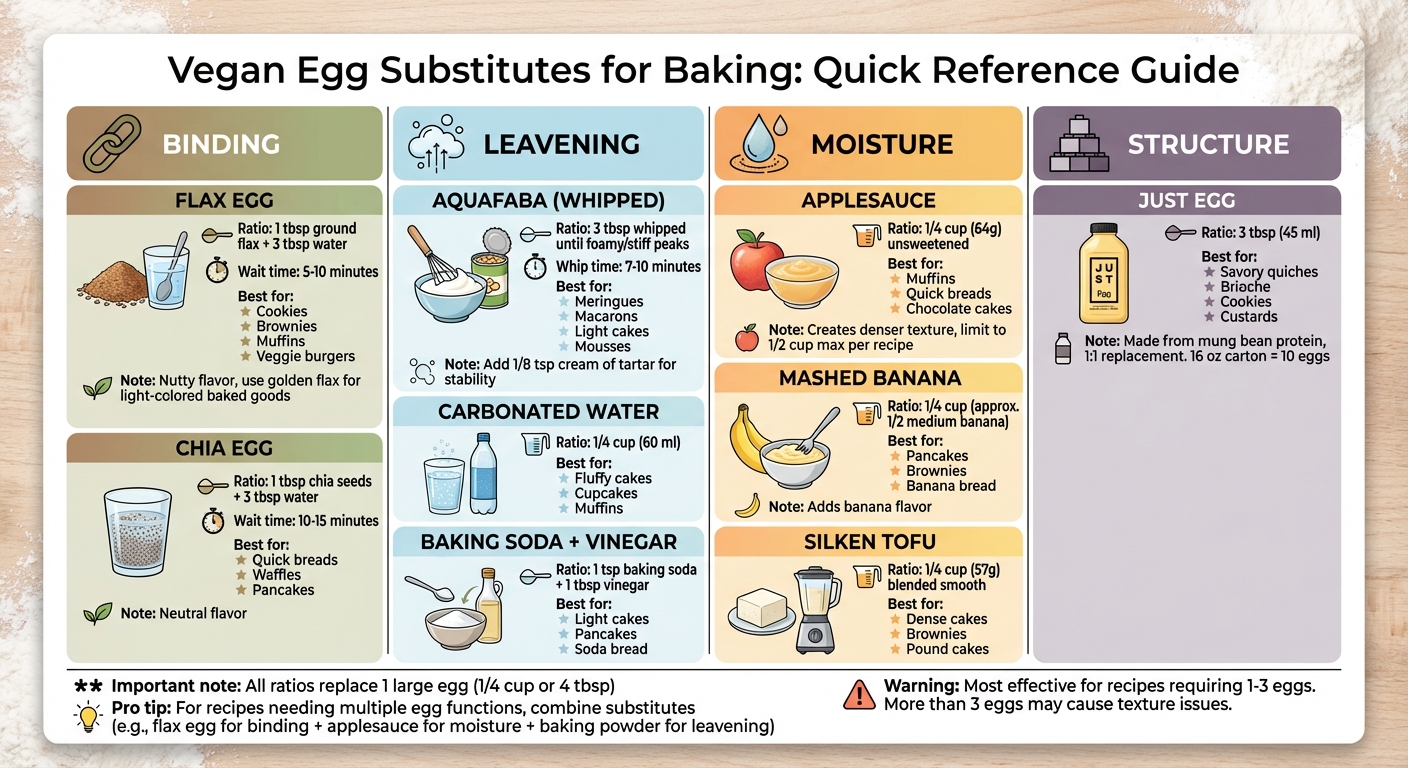
Vegan Egg Substitute Guide: Functions, Ratios, and Best Uses
The Ultimate Vegan Egg Replacement Guide - what works where
sbb-itb-ac3a9b8
Binding Substitutes
Eggs play a key role in binding ingredients together, especially in baked goods. If your cookies or muffins fall apart, you’ll need a substitute that can hold everything in place. Binding substitutes create a gel-like consistency, mimicking the way eggs work to keep recipes intact. Two of the most popular options are flax and chia eggs.
Flax Egg
When you mix ground flaxseed with water, it forms a thick, gel-like substance that works as an excellent binder. This happens because flaxseeds contain mucilage, a natural gum that activates when combined with water, creating a texture similar to egg whites.
"The outer seed coating of flaxseed contains a gum that becomes really thick - almost gelatinous - once ground and mixed with water. This new, thicker substance has proven to be a great emulsifier and binder." - Megan Gordon, Cookbook Author and Brand Consultant
The formula is straightforward: combine 1 tablespoon of ground flaxseed meal with 3 tablespoons of water to replace one egg. Whisk the mixture and let it sit for 5–15 minutes until it thickens. Using room-temperature or slightly warm water can speed up the process.
Flax eggs work particularly well in hearty baked goods like chocolate chip cookies, banana muffins, brownies, and pancakes. They add a mild nutty flavor that complements whole grain recipes. If you’re making light-colored treats like vanilla cake, golden flaxseeds can help avoid dark specks in your batter. Keep in mind, though, flax eggs are great for binding but don’t add lift. For recipes needing extra rise, try mixing a small pinch of baking powder into the gelled flax egg.
Pro tip: For the best results, grind whole flaxseeds fresh. Pre-ground flaxseed meal can lose its effectiveness if it turns rancid, so store whole seeds in the freezer to maintain freshness.
Chia Egg
Chia seeds are another fantastic binding option, working in much the same way as flaxseeds. They also contain mucilage, which forms a gel when mixed with water. To make a chia egg, mix 1 tablespoon of chia seeds with 3 tablespoons of water. Let the mixture sit for 5–10 minutes until it thickens.
Unlike flax eggs, chia eggs have a neutral flavor, making them a better choice when you don’t want to add a nutty taste to your baked goods. They’re particularly useful in recipes like waffles, pancakes, thick cookies, and quick breads.
If you’re concerned about visible specks in your final product, you can grind chia seeds into a fine powder for a smoother texture. Like flax eggs, chia eggs don’t provide lift, so they’re best used in recipes that call for one or two eggs. Using more than that might result in a denser outcome.
Both flax and chia eggs are reliable options for binding, but their subtle differences in flavor and appearance let you choose the best fit for your recipe.
Leavening Substitutes
Once you've got your binding agents sorted with flax or chia eggs, the next step is achieving the perfect rise. That’s where aquafaba steps in. For recipes like meringues, cakes, or mousses that need a bit of lift, aquafaba traps air, acting just like egg whites. While binding agents hold everything together, aquafaba ensures your creations rise to the occasion.
Aquafaba
Aquafaba is the liquid you find in a can of chickpeas - it’s that slightly thick, starchy water. Its magic lies in its ability to whip into a stable foam, thanks to a mix of proteins, carbs, and plant solids that trap air bubbles and add structure.
"Aquafaba (literally 'bean water') is the cooking liquid from chickpeas or other legumes. What makes it extraordinary is its ability to not just bind ingredients, but also to whip up into stable foams and meringues - something most other egg substitutes can't do." - BakingSubs
The basic rule of thumb is 3 tablespoons of aquafaba for one whole egg or 2 tablespoons for one egg white. A single 15-ounce can of chickpeas typically provides about 1/2 cup of aquafaba. To use it, whip the liquid for 7–10 minutes until stiff peaks form. Adding 1/8 teaspoon of cream of tartar per 2 tablespoons of aquafaba helps stabilize the foam. Make sure to use a clean, grease-free metal or glass bowl - any fat will ruin the foam.
If the liquid from your chickpeas seems too thin, simmer it on the stovetop until it thickens to the texture of egg whites. Let it cool completely before whipping. To neutralize the slight bean-like smell, try adding a touch of vanilla or almond extract - it disappears entirely during baking.
Aquafaba shines in recipes like meringues, macarons, marshmallows, mousses, and even light waffles. However, it’s less effective for dense, structure-dependent cakes like angel food or chiffon, which may collapse since aquafaba doesn’t firm up as much as egg proteins when heated. For simpler baked goods like single-layer cakes or muffins, it provides just the right amount of lift without any risk of sinking.
If you have leftover aquafaba, freeze it in ice cube trays, using 1 tablespoon per cube, and store it for up to 3 months. It’s a handy way to ensure you always have some ready for your next baking project.
Moisture Substitutes
Some recipes call for added moisture to achieve that perfect tender crumb. Moisture substitutes are ideal for baked goods like muffins, quick breads, and brownies, where softness and moisture are key. While these substitutes won't help with rising or provide structural support, they excel at keeping the interior moist and tender.
"When eggs are replaced, it's essential to use alternatives that provide similar moisture, so your baked goods don't turn out dry or crumbly." - Juliane Priesemeister, Author, Egg-Truth
Moisture substitutes are best suited for recipes where tenderness takes priority over structure. If you're working on a light, airy sponge cake, these might not be the best choice. But for dense, hearty treats that need a moist interior, they're just the ticket.
Applesauce
Applesauce is a popular choice because its high liquid content and natural pectin provide moisture and a slight binding effect. To replace one egg, use 1/4 cup (about 60g) of unsweetened applesauce.
"Applesauce is high in pectin, which acts as a binding agent and helps create a similar texture as eggs in baked goods." - Jessica Hylton, Founder, Jessica in the Kitchen
Opt for unsweetened applesauce to keep the sugar levels in check. Its mild flavor works well in vanilla or fruit-flavored recipes, where you don't want competing tastes. Applesauce shines in muffins, quick breads, brownies, and cakes, delivering a moist and tender crumb. However, it does result in a denser texture, so your baked goods may feel heavier compared to those made with eggs. To lighten the outcome, you can add a bit more baking powder. Keep in mind, applesauce can also prevent muffin tops from crisping up.
"Applesauce is one of the most dense egg replacements so I don't recommend that you use more than a 1/2 cup in any given recipe." - Laura Schneider, Founder, Friendly Vegan Kitchen
To avoid overly heavy or gummy results, limit the use of applesauce to replacing no more than two eggs (1/2 cup total) in any recipe. For recipes that need both moisture and binding, consider combining applesauce with a flax egg for a better balance.
Structure Substitutes
Structure substitutes are crucial for recipes where eggs provide stability and firmness, like custards, dense cakes, or savory dishes such as quiches. They ensure baked goods maintain their shape, rounding out the functions of eggs alongside binding, leavening, and moisture.
"Just One's functional protein creates the perfect egg replacer... Use it to provide the same binding, structure and moisture that eggs typically contribute to baking recipes." – Eat Just
These substitutes shine in recipes that need a custard-like consistency or a dense, stable crumb. Think of pecan pies, brownies, frittatas, or pound cakes. Below, we’ll break down how JUST Egg serves as an effective structural substitute.
JUST Egg
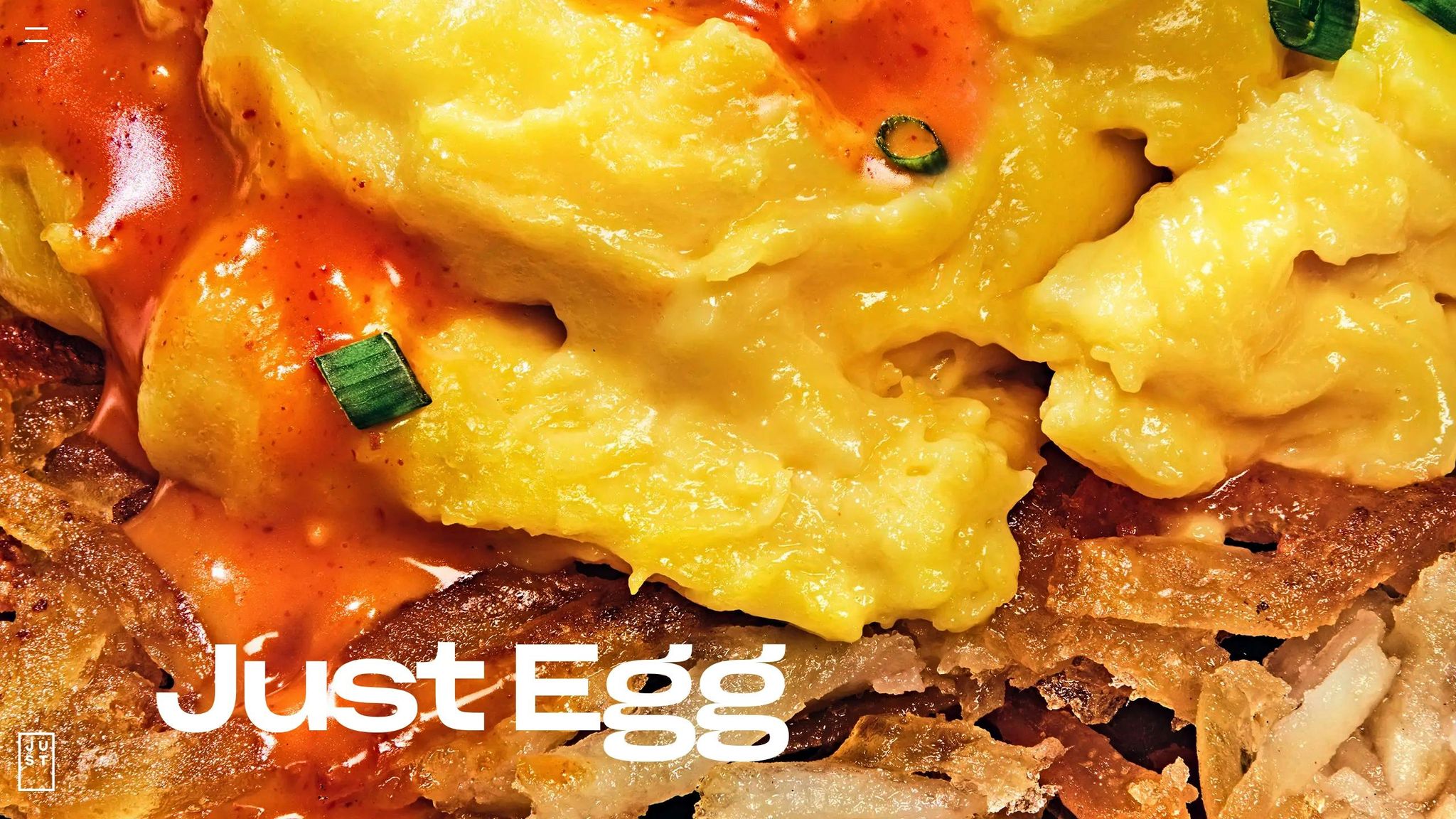
JUST Egg, made primarily from mung bean protein isolate, is specifically designed to replicate the structural properties of chicken eggs. It acts as a direct one-to-one replacement for whole eggs, providing the binding and firmness necessary for stable baked goods.
To replace one egg, use 3 tablespoons (45 ml) of liquid JUST Egg. A 16-ounce carton contains the equivalent of about 10 eggs. When heated, the mung bean protein coagulates, creating a firm, set texture similar to that of eggs. Ingredients like soy lecithin (emulsifier) and gellan gum (stabilizer) further reinforce its ability to maintain structure during baking.
"While liquid Just Egg can replace chicken eggs in a one-for-one swap in many culinary applications, note that it cannot replicate egg whites." – VegNews
JUST Egg works best in recipes like custards, quiches, dense cakes, and brownies. However, it doesn’t whip like egg whites, so for meringues, aquafaba is a better option. For optimal results, use JUST Egg at room temperature. If your recipe needs extra fat for texture, you can add 1 teaspoon of oil per egg replaced. This targeted approach complements the broader guide to vegan egg substitutes in baking.
Function Reference Table
Here’s a quick guide to help you match vegan egg substitutes with their specific baking roles - whether it’s binding, leavening, moisture, or structure. This table simplifies the process, making it easier to veganize your favorite recipes.
| Function | Best Substitute | Substitute Ratio (for 1 Egg) | Best For |
|---|---|---|---|
| Binding | Flax Egg | 1 tbsp ground flax + 3 tbsp water (let sit 5-10 mins) | Cookies, brownies, muffins, veggie burgers |
| Binding | Chia Egg | 1 tbsp chia seeds + 3 tbsp water (let sit 10-15 mins) | Quick breads, waffles, pancakes |
| Leavening | Aquafaba (Whipped) | 3 tbsp (whipped until foamy or stiff) | Meringues, macarons, light cakes |
| Leavening | Carbonated Water | 1/4 cup (60 ml) | Fluffy cakes, cupcakes, muffins |
| Leavening | Baking Soda + Vinegar | 1 tsp baking soda + 1 tbsp vinegar | Light cakes, pancakes, soda bread |
| Moisture | Applesauce | 1/4 cup (64 g) unsweetened | Muffins, quick breads, chocolate cakes |
| Moisture | Mashed Banana | 1/4 cup (approx. 1/2 medium banana) | Pancakes, brownies, banana bread |
| Moisture | Silken Tofu | 1/4 cup (57 g) blended until smooth | Dense cakes, brownies, pound cakes |
| Structure | JUST Egg | 3 tbsp (45 ml) | Savory quiches, brioche, cookies |
These ratios are based on the equivalent of one large egg (1/4 cup or 4 tbsp) and are most effective in recipes requiring 1–3 eggs. Using substitutes for more than three eggs may result in texture issues. If a recipe calls for multiple eggs with different roles, you can mix substitutes to achieve the desired outcome.
For effortless conversions, check out RecipeFix, which automatically selects the best substitute for your recipe, saving you the trial and error.
Fixing Common Problems
When vegan egg substitutes don’t quite deliver - whether it’s binding, leavening, or adding moisture - there are ways to troubleshoot and improve your results.
Dense or heavy texture often happens when substitutes like applesauce, mashed banana, or flax eggs provide moisture and binding but lack leavening power. To address this, try adding 1/2 teaspoon of baking powder or mix 1 teaspoon of baking soda with 1 tablespoon of vinegar for an extra lift.
Back in March 2025, Julissa Roberts from The Kitchn tested various substitutes and found that while applesauce and mashed banana made muffins gummy, carbonated water produced a light, airy texture.
Dry or crumbly results suggest your substitute might be missing enough moisture or fat. If your batter looks too dry, mix in 1–2 tablespoons of non-dairy milk or oil . Once you’ve added moisture, make sure the batter can still rise properly to avoid further issues.
Poor rise occurs when the leavening aspect is missing. To fix this, use 1/4 cup (60 ml) of carbonated water or the vinegar-and-baking soda combo as a replacement for one egg . Be careful not to overmix your batter, as this can reduce the leavening effect and leave you with flat results.
For recipes that require multiple egg functions, combining substitutes is often the best solution. For example, you could use a flax egg for binding, applesauce for moisture, and baking powder for leavening. As Fraya Berg from Food Network explains:
"There isn't one egg substitute that can do everything an egg can do... at least one of them will stand in for eggs based on its characteristics".
If you’re unsure which combination works best, tools like RecipeFix can help you determine the ideal egg substitute mix for your recipe.
Conclusion
The key to mastering vegan baking isn't about finding a one-size-fits-all egg substitute - it’s about understanding the role eggs play in your recipe. Whether you need binding, leavening, moisture, or structure, choosing the right substitute ensures your baked goods turn out light, moist, and cohesive rather than dense or crumbly.
As Juliane Priesemeister puts it, "Understanding how eggs work is the first step in finding the right vegan substitute". By identifying the egg's specific function in a recipe, you can select the best alternative - or even a combination of alternatives - to achieve the desired results.
Vegan baking often involves a bit of trial and error, so starting with simpler recipes can help you build confidence. Over time, you'll develop a knack for knowing which substitutes work best in different scenarios. For recipes requiring multiple egg functions, combining substitutes can be a game-changer. For example, you might use applesauce for moisture, a flax egg for binding, and baking powder for leavening. This method allows you to address each role eggs typically play, giving you greater control over texture and flavor.
To make things even easier, tools like RecipeFix can help match your recipes with the ideal vegan egg substitutes for each function. This takes the guesswork out of the process, making it simpler to transform your favorite baked goods into vegan-friendly versions without sacrificing quality.
FAQs
How do I know what job eggs are doing in my recipe?
To understand how an egg contributes to your recipe, pinpoint its purpose: binding, leavening, moisture, or structure. For instance, eggs hold ingredients together in cookies, help cakes rise, or add both moisture and stability to various baked goods. Once you’ve identified its role, you can pick a vegan alternative like flaxseed eggs for binding or aquafaba for leavening, ensuring your dish turns out just right.
Can I combine egg substitutes in one bake?
Yes, you can use multiple egg substitutes in a single recipe to achieve various functions like binding, leavening, or adding moisture. The key is understanding the role of each substitute and how they work together. For instance, combining a flax egg for binding with aquafaba for leavening can be a great approach in some recipes. Pay attention to the balance to get the best results.
Why do my vegan bakes turn out gummy or dense?
When it comes to vegan baking, achieving the right texture can be tricky. Bakes often turn out gummy or dense because of overmixing, using the wrong ingredient ratios, or picking an unsuitable egg substitute. Overmixing activates too much gluten, leading to a tougher texture. On the other hand, adding too much liquid or flour can make your baked goods heavy and unappealing.
To sidestep these issues, precision is key. Measure your ingredients carefully and mix just enough to combine them - no more. When it comes to egg substitutes, options like flax or chia eggs work well for binding, while baking powder or vinegar can help with leavening. These swaps can make a big difference, resulting in lighter, fluffier treats.
Adapt a recipe free with RecipeFix → · Substitution guides with exact ratios