Home / Blog / 7 Vegan Substitutions That Actually Work in Traditional Recipes
7 Vegan Substitutions That Actually Work in Traditional Recipes
Practical plant-based swaps for milk, butter, eggs, cheese, and meat with ratios and tips to preserve flavor and texture in traditional recipes.
7 Ways to Make Vegan Substitutions in Traditional Recipes
Transforming recipes to vegan versions is simpler than you think. With easy swaps, you can maintain flavor and texture while meeting dietary preferences or restrictions. Here are seven ways to replace common ingredients with plant-based alternatives:
- Plant-Based Milks: Use soy, oat, or almond milk for dairy, adjusting based on flavor and texture needs.
- Butter Replacements: Swap butter with oils or vegan spreads in cooking and baking.
- Flax or Chia "Eggs": Combine ground seeds with water for a binding substitute.
- Nutritional Yeast: Add cheesy flavor to sauces, pasta, or popcorn.
- Tofu and Tempeh: Replace meat with these soy-based proteins for hearty dishes.
- Beans or Lentils: Use them instead of ground meat for tacos, chili, or stews.
- Aquafaba: Whip chickpea liquid for egg whites in meringues or mousses.
These substitutions are practical, healthy, and eco-friendly, making it easy to enjoy your favorite dishes in a plant-based way.
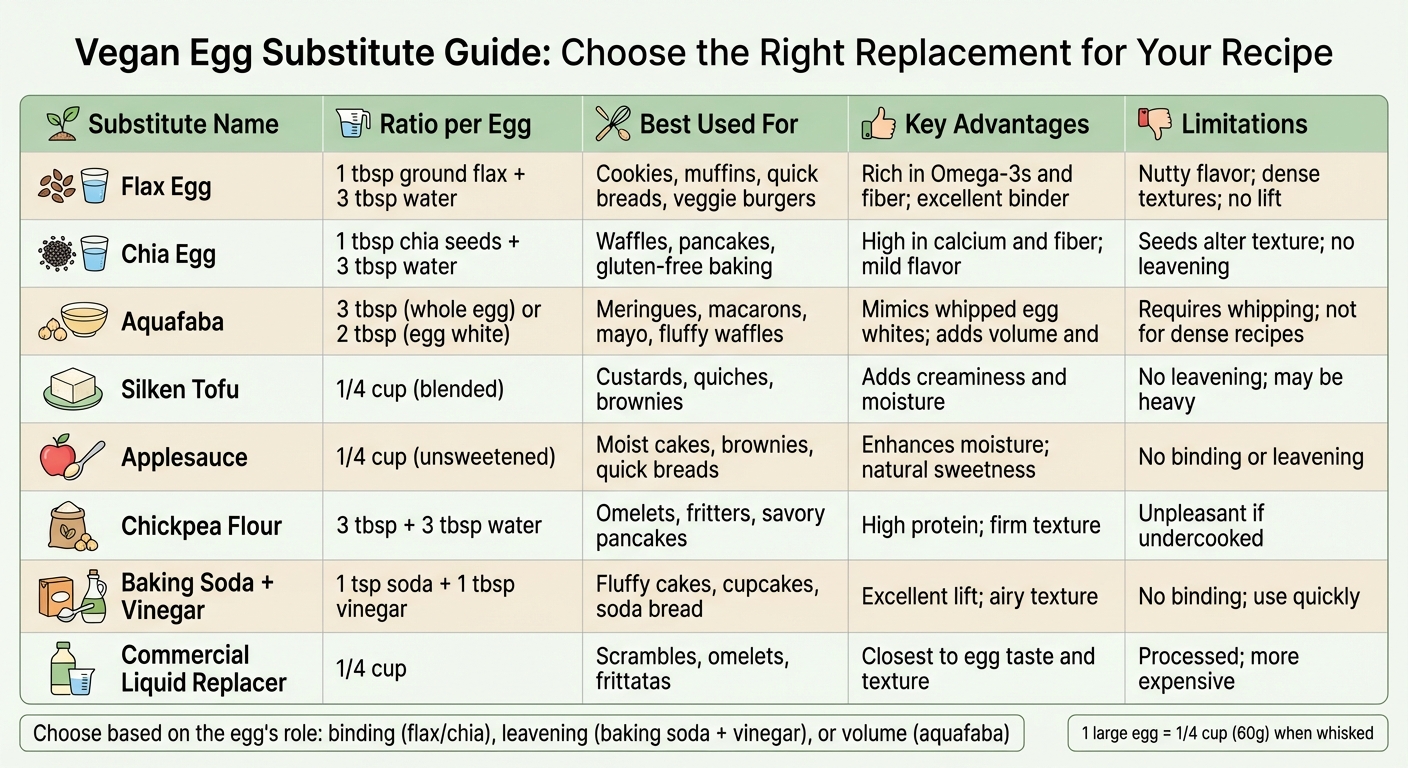
Vegan Egg Substitute Comparison Chart: Ratios, Uses, and Benefits
1. Use Plant-Based Milks for Dairy Milk
Ease of Substitution
Switching from dairy milk to plant-based milk is simple - just use a 1:1 ratio. For savory recipes, stick with unsweetened, plain plant milks to avoid adding any unexpected sweetness. Flavored or sweetened options can throw off the taste in dishes like pasta sauces or soups. Need vegan buttermilk? Mix 1 cup of plant milk with 1 tablespoon of lemon juice or vinegar, then let it rest for 5–15 minutes before using.
It's also worth noting that the texture and flavor of different plant milks can influence your final dish, so choose wisely.
Taste and Texture Similarity to Traditional Ingredients
Soy milk is one of the closest matches to dairy milk in both taste and texture. It even offers about 8 grams of protein per cup, which helps with browning in baked goods. Oat milk, with its creamy and mild flavor, works well in both sweet and savory recipes. Cashew milk brings a rich, smooth texture ideal for creamy sauces, while rice milk, being thinner and slightly sweet, is better suited for lighter dishes.
Best Suited Dishes or Recipes for the Substitution
The best plant milk for your recipe depends on the dish. Soy milk is great for baking because it enhances browning. Oat milk is a versatile choice for creamy soups, sauces, and baked goods. Almond milk works well in lighter baking projects, but avoid boiling it to prevent separation. Coconut milk is perfect for Thai-inspired dishes or tropical desserts, thanks to its rich, distinct flavor. When using soy milk, only bring it to a boil to avoid curdling.
sbb-itb-ac3a9b8
2. Swap Butter with Plant-Based Spreads or Oils
Ease of Substitution
Once you've replaced dairy milk with plant-based options, swapping butter for plant-based spreads or oils is the next logical step. And the good news? It's pretty straightforward.
For general cooking - like sautéing or making sauces - you can use a 1:1 ratio: substitute 1 tablespoon of oil for every tablespoon of butter. When it comes to baking, the same ratio applies, but you might need to tweak it slightly. For instance, if you're using oil in baked goods, reduce the oil by up to 3 tablespoons per cup of butter for the best results.
Cookies need a bit more care. Use half the amount of liquid oil (e.g., 1/2 cup oil for every cup of butter) and add 2 extra tablespoons of liquid to ensure the dough stays properly hydrated. If you prefer vegan shortening or plant-based buttery spreads, stick with the standard 1:1 ratio for cookies and pie crusts.
Once you’ve nailed the measurements, think about how your choice of fat will influence the taste and texture of your dish.
Taste and Texture Similarity to Traditional Ingredients
The type of fat you use plays a big role in how your dish turns out. Solid fats, like coconut oil or palm shortening, are great for recipes that need structure, such as pie crusts, biscuits, or frostings, since they solidify at room temperature. On the other hand, liquid oils like canola or olive oil are better suited for moist, dense cakes.
"Oil is reliable and shelf-stable... It's not emulsified, it's pure fat so there isn't variation in composition, and there are no added ingredients."
– Alisa Fleming, Founder, Go Dairy Free
For a neutral flavor, refined oils like refined coconut or canola are your best bets. But if you want to add a little extra character, unrefined oils can do the trick. Olive oil, for instance, can bring grassy or peppery notes, while walnut oil adds a nutty flavor. If you’re using commercial vegan butters, they’re designed to mimic the taste and performance of dairy butter, making them a user-friendly option. Pure oils, however, might need a bit of recipe tweaking to get them just right.
Best Suited Dishes or Recipes for the Substitution
Plant-based butters and margarines are versatile and work well in a 1:1 ratio for cookies, frostings, sautéing, or just spreading on bread. Coconut oil shines in chocolate-based recipes and dishes that benefit from a crisp texture. For moist baked goods like cakes and muffins, vegetable or olive oils are perfect - use about 3/4 cup of oil for every cup of butter.
Vegetable shortening is ideal for flaky pie crusts and stable icings, while avocado oil, with its high smoke point, is excellent for high-heat cooking like frying or searing. With so many options, you can find a plant-based fat to suit just about any dish.
3. Replace Eggs with Flaxseed or Chia Eggs
Ease of Substitution
Swapping eggs for flax or chia eggs is simple. Combine 1 tablespoon of ground flaxseed (or chia seeds) with 3 tablespoons of water in a small bowl, stir thoroughly, and let it sit for 5–15 minutes until it thickens into a gel-like texture. If you're short on time, using boiling water can cut the thickening process to just two minutes.
For best results, grind whole flaxseeds right before use, as this ensures freshness. Store any leftover ground flaxseed in an airtight container in the fridge for up to six months. Golden flaxseeds are ideal for lighter-colored baked goods since they blend in better, while brown flaxseeds may introduce a nuttier flavor and noticeable specks. If you notice a smell resembling "oil paint or a box of crayons", the flaxseed has spoiled and should be discarded.
Taste and Texture Similarity to Traditional Ingredients
Flax and chia eggs work differently compared to chicken eggs. While they excel at binding, they don't provide the lift or aeration needed for certain recipes. As Kathryne Taylor, author and founder of Cookie and Kate, puts it:
"Flax eggs yield a gluey texture similar to egg whites, which helps bind ingredients together".
This makes them a great choice for holding baked goods together, though you should expect a denser and moister texture than traditional eggs would provide.
In terms of flavor, flax eggs add a subtle nuttiness that complements hearty recipes, while chia eggs are more neutral, making them suitable for delicately flavored pastries. If you're aiming for a smoother texture, opt for ground chia seeds instead of whole ones, which can add a crunchy, poppy seed-like texture. Nutritionally, one flax egg contains about 35 calories, 1.3g of protein, and 2g of fiber, compared to a chicken egg's 70 calories, 6g of protein, and no fiber. Plus, flax and chia eggs are entirely cholesterol-free.
Best Suited Dishes or Recipes for the Substitution
Flax and chia eggs shine in recipes where binding is key. They're perfect for dense baked goods like cookies, brownies, muffins, quick breads, pancakes, and waffles, as well as savory dishes such as veggie burgers, lentil meatballs, meatloaf, and zucchini fritters. Genevieve Ko, Senior Editor at NYT Cooking, highlights their versatility:
"Flax 'eggs' are the most versatile substitute because flax contains fat, has a subtle nutty taste that pairs with just about any sweet and binds ingredients together well".
However, these substitutes aren't ideal for recipes that depend on eggs for structure or lift, like soufflés, meringues, custards, or light sponge cakes. Since flax and chia eggs don't offer leavening, you might need to add a pinch of baking powder to help your recipes rise. Additionally, avoid using flax eggs in almond flour-only recipes, as they can lead to a pudding-like texture rather than a firm bake.
4. Substitute Cheese with Nutritional Yeast
Ease of Substitution
Nutritional yeast, often referred to as "nooch", is a simple way to add a cheesy, nutty, umami kick to your dishes. It’s grown on molasses and is incredibly easy to use - start with 1–2 tablespoons and adjust based on your taste preferences. For recipes that call for cheese, you can swap in 1 tablespoon of nutritional yeast for every 1/4 cup of cheese.
To make creamy cheese sauces, blend nutritional yeast with non-dairy milk and a thickener like cashews or cornstarch. For a tangier, sharper flavor, throw in some lemon juice and a pinch of salt. If you’re after a crumbly "Parmesan" texture, pulse nutritional yeast with raw cashews or hemp hearts and a little salt until fine. When adding it to soups or stews, stir it in during the last 10–15 minutes of cooking to protect its heat-sensitive B vitamins. This easy swap not only brings a distinctive flavor but also allows you to experiment with how it compares to traditional cheeses.
Taste and Texture Similarity to Traditional Ingredients
When it comes to flavor, nutritional yeast holds its own against traditional cheeses. Thanks to its rich glutamate content, it often reminds people of Parmesan or sharp cheddar. Shilpa Uskokovic, Food Editor at Bon Appétit, describes it as:
"The result is delicious, malty, and smells like crushed corn chips with undertones of fresh parm."
However, nutritional yeast doesn’t melt or stretch like dairy cheese. It’s typically sold as dry yellow flakes or powder and lacks the creamy texture of dairy fats. That said, when blended with liquids or combined with fats like cashews or vegan butter, it can create a smooth, creamy consistency. Plus, it’s not just about taste - one tablespoon delivers 8 grams of protein, 3 grams of fiber, and, in fortified versions, 100% of your daily Vitamin B12 needs.
Best Suited Dishes or Recipes for the Substitution
Nutritional yeast shines as a topping for popcorn, roasted veggies, pasta, pizza, or even avocado toast. It’s a go-to for vegan mac and cheese, nacho sauces, pesto, or spinach artichoke dip. You can also mix it with crumbled tofu to make a ricotta substitute for lasagna or use it in scrambles, quiches, and grits. While it doesn’t replicate the stretchiness of mozzarella, you can combine it with tapioca starch to achieve a melty texture. To keep it fresh, store nutritional yeast in a sealed container in a cool, dark spot - it’ll stay good for 1–2 years without refrigeration.
5. Use Tofu or Tempeh for Meat
Ease of Substitution
Tofu and tempeh are excellent alternatives to meat, each with its own preparation methods. Tofu, made from coagulated soy milk curds pressed into blocks, has a soft and versatile texture. On the other hand, tempeh is created from fermented whole soybeans, giving it a dense and hearty form. For tofu, pressing it for 15–30 minutes removes excess water, allowing it to soak up marinades better and achieve a crispier sear. Freezing tofu can also transform its texture, making it more porous and meat-like.
Tempeh, with its chewy texture and bold, fermented flavor, can be steamed for about 10 minutes to reduce bitterness and improve its ability to absorb marinades. For dishes like tacos, chili, or shepherd's pie, firm tofu can be crumbled, while tempeh can be pulsed in a food processor to achieve a ground meat-like consistency.
These preparation steps help tofu and tempeh mimic the textures of traditional meat dishes.
Taste and Texture Similarity to Traditional Ingredients
Tofu’s neutral taste makes it a flavor sponge, adapting to a wide range of dishes. Its texture varies from silken to extra-firm, making it suitable for everything from creamy scrambles to grilled recipes. As Joy Manning from Simply Recipes explains:
"Like chicken breast, the world's most versatile plant-based protein, tofu provides a blank canvas for flavor".
Tempeh, in contrast, has a nuttier, earthy flavor and a firm, pebbly texture that works well in dishes requiring a "meaty" bite. Bon Appétit describes it as:
"dense and nutty, with more inherent personality than a pale block of tofu".
Nutritionally, tempeh stands out with 20 grams of protein per 100 grams, compared to tofu’s 9.4 grams. It also offers about 4 grams of fiber per 3-ounce serving.
Best Suited Dishes or Recipes for the Substitution
Thanks to their versatility, tofu and tempeh can shine in various recipes. Tofu works beautifully in stir-fries, stews, and braises, making it perfect for dishes like ma po tofu or chilled noodle bowls. It can also be seared into crispy cubes for salads, crumbled for "egg" scrambles, or breaded for fish-style tacos.
Tempeh is ideal for hearty dishes that require a substantial bite, such as burgers, BBQ sandwiches, bacon strips, or Indonesian-style satay skewers. In fact, tempeh has been a staple protein in Indonesia since at least the 17th century. Both tofu and tempeh are also excellent in tacos, chili, and breakfast scrambles, offering endless possibilities for plant-based cooking.
6. Use Beans or Lentils in Ground Meat Dishes
Ease of Substitution
Swapping ground meat with beans or lentils is easier than you might think. For every pound of ground meat, you can use 2 cups of cooked lentils. Green, brown, and black lentils are ideal since they hold their shape during cooking and deliver a firm, satisfying texture. To keep them intact and avoid a mushy result, cook lentils for about 30 minutes. If you're in a rush, pre-cooked lentils from a can or box are just as effective.
For larger beans like chickpeas, black beans, or pinto beans, try coarsely mashing them for tacos, burritos, or sandwiches. The type of bean you choose can complement specific cuisines - pinto or black beans pair wonderfully with Mexican dishes, while lentils shine in Mediterranean or Indian recipes. To replicate the savory depth of ground beef, consider adding ingredients like soy sauce, nutritional yeast, or liquid smoke for an umami boost.
This substitution not only simplifies meal prep but also delivers a texture that's surprisingly close to traditional ground meat.
Taste and Texture Similarity to Traditional Ingredients
Beans and lentils bring a mild flavor but are excellent at soaking up spices, sauces, and aromatics, making them highly adaptable. Mary Margaret Chappell, a recipe developer at Forks Over Knives, highlights their versatility:
"Green, brown, and black lentils are one of the easiest plant food swaps to make".
Lentils, with their small, firm grains, resemble the texture of ground beef in saucy dishes. Meanwhile, chickpeas offer a dense, chewy texture, making them a great stand-in for poultry in dishes like "chicken" salads. For a heartier texture, try blending lentils with minced mushrooms and crushed walnuts.
Best Suited Dishes or Recipes for the Substitution
Lentils and beans are incredibly versatile, fitting seamlessly into recipes like Bolognese, tacos, sloppy joes, lettuce wraps, and shepherd's pie. Joy Manning, a plant-based recipe developer, shares:
"Lentils... make a surprisingly good sub, especially for ground beef dishes like tacos, lettuce wraps, and 'meat' sauces".
For pasta sauces, simmer lentils for about 30 minutes to maintain their shape. Black beans and pinto beans are perfect for burritos and tacos, while mashed chickpeas work beautifully in "tuna" or "chicken" salads. In chili or hearty soups, using a mix of beans creates a variety of textures. You can even make smoky, crunchy "bacon" bits by tossing 1.5 cups of cooked beans with smoked paprika and roasting them at 400°F for 35–40 minutes.
7. Try Aquafaba for Egg Whites
Ease of Substitution
If you're looking for a plant-based alternative to egg whites, aquafaba is a fantastic option. This is the liquid found in canned chickpeas, and it works as a direct substitute for egg whites in many recipes. The swap is simple: 2 tablespoons of aquafaba equal one large egg white. A single 15-ounce can of chickpeas typically provides about ½ cup of aquafaba, which can be whipped into 2–3 cups of foam.
To whip aquafaba, use a mixer and beat it for 3–10 minutes until stiff peaks form. For added stability, Rossi Anastopoulo from King Arthur Baking recommends:
"Cream of tartar is key to stable whipped aquafaba. Just 1/8 teaspoon per 2 tablespoons aquafaba does the trick."
If the liquid seems too watery, simmer it briefly to thicken until it resembles lightly whisked egg whites. For the best results, stick to the liquid from canned chickpeas rather than homemade versions, as canned aquafaba offers consistent thickness. Leftovers can be stored in ice cube trays, with each cube measuring about 1 tablespoon for easy use.
Taste and Texture Similarity to Traditional Ingredients
Aquafaba does a great job mimicking the performance of egg whites, forming stiff, airy peaks perfect for recipes like meringues and mousses. It may have a mild beany or savory flavor, but this can easily be masked with a splash of vanilla extract, almond extract, or even citrus zest for delicate recipes. According to Rossi Anastopoulo:
"Aquafaba makes the same kind of crispy, crunchy, sweet meringue you would expect from regular egg whites."
However, aquafaba isn't as heat-stable as egg whites. It may lose structure at temperatures above 200°F, making it less effective in recipes like angel food or chiffon cakes.
Best Suited Dishes or Recipes for the Substitution
Aquafaba shines in recipes where light and fluffy textures are key. It’s perfect for meringues, pavlovas, macarons, and marshmallow spreads when whipped to stiff peaks. For softer peaks, it works beautifully in dishes like pancakes, waffles, or chocolate mousse. Even unwhipped, aquafaba is a great binder for cookies, brownies, or vegan mayonnaise.
Ryan, founder of The Vegan Skillet, highlights its versatility:
"Aquafaba's ability to whip up into sturdy peaks and bind batters rivals eggs in most baked goods, making it one of my favorite vegan pantry essentials."
4 meaty recipes that you won't believe are vegan
Comparison Table
Here’s a handy breakdown of popular egg substitutes, highlighting their best uses and any potential drawbacks.
Flax and chia eggs are excellent for binding, while aquafaba shines in recipes needing light, airy textures. Each option has its own strengths and weaknesses, so choose based on your recipe's needs.
| Substitute | Ratio per Egg | Best Used For | Advantages | Drawbacks |
|---|---|---|---|---|
| Flax Egg | 1 tbsp ground flax + 3 tbsp water | Cookies, muffins, quick breads, veggie burgers | Rich in Omega-3s and fiber; excellent binder | Nutty flavor; can result in dense textures; lacks "lift" |
| Chia Egg | 1 tbsp chia seeds + 3 tbsp water | Waffles, pancakes, gluten-free baking | High in calcium and fiber; mild flavor | Whole seeds may alter texture; no leavening ability |
| Aquafaba | 3 tbsp (whole egg) or 2 tbsp (egg white) | Meringues, macarons, mayo, fluffy waffles | Mimics whipped egg whites; adds volume and rise | Requires whipping; not ideal for dense recipes |
| Silken Tofu | 1/4 cup (blended) | Custards, quiches, brownies | Adds creaminess and moisture | No leavening; may create heavy results |
| Applesauce | 1/4 cup (unsweetened) | Moist cakes, brownies, quick breads | Enhances moisture and adds natural sweetness | Lacks binding or leavening properties |
| Chickpea Flour | 3 tbsp + 3 tbsp water | Omelets, fritters, savory pancakes | High protein; creates a firm texture | Can taste unpleasant if undercooked |
| Baking Soda + Vinegar | 1 tsp soda + 1 tbsp vinegar | Fluffy cakes, cupcakes, soda bread | Provides excellent lift and airy texture | No binding ability; must be used quickly |
| Commercial Liquid Replacer | 1/4 cup | Scrambles, omelets, frittatas | Closest match to egg taste and texture | Often processed; more costly |
Choosing the right substitute depends on the egg's role in your recipe. For binding, flax or chia eggs are top picks. If you need rise or fluffiness, try aquafaba or the baking soda-vinegar mix. As Fraya Berg, Chef and Culinary Educator for the Food Network, notes:
"There isn't one egg substitute that can do everything an egg can do... at least one of them will stand in for eggs based on its characteristics."
Keep in mind: a single large egg equals 1/4 cup (60 g) when whisked, which is reflected in the measurements given above.
Conclusion
Switching traditional recipes to vegan versions doesn't mean giving up the flavors and textures you love. Plant-based milks add creaminess to sauces, nutritional yeast brings a cheesy, savory kick, and flax or chia eggs keep baked goods perfectly bound. Aquafaba creates light, airy meringues, while tofu and tempeh absorb marinades just like meat. Lentils and beans? They provide that hearty, satisfying bite in dishes that are both flavorful and nourishing.
As Chef Day Radley, Founder of Vegan Chef School, explains:
"Learning how to cook with plant-based ingredients will change the way you think about food forever. You'll be surprised by the ways in which mushrooms, eggplants, tempeh and tofu can replicate the tastes and textures of your favorite meaty meals!"
This highlights the importance of using the right substitutions for each dish. It’s all about understanding what the original ingredient does in the recipe. For example, unsweetened plant milks work best in savory dishes, flax eggs are ideal for cookies and muffins, and aquafaba shines when you need volume and fluff. Each alternative has its strengths, and knowing how to match them to the recipe's needs makes all the difference.
Not sure where to start? RecipeFix Premium takes the guesswork out of the process. For $3.99 a month or $27.99 a year, it offers instant recipe conversions tailored to any dietary need, adjusts serving sizes, and provides step-by-step cooking instructions with built-in timers. It’s the perfect tool for anyone looking to veganize their favorite meals without the trial and error.
Dive into these seven substitutions today, and you’ll see just how simple it is to enjoy your favorite comfort foods while embracing a plant-based lifestyle.
FAQs
How do I pick the best vegan swap for a recipe?
When picking the right vegan substitute, think about what the ingredient is supposed to do - does it add creaminess, act as a binder, or boost flavor? For a cheesy taste, go for plant-based cheese or nutritional yeast. Need an egg replacement? Options like aquafaba, flaxseed, or chia seeds work well. Make sure to match the substitute to the dish's flavor profile, whether it's sweet or savory, and experiment to find the best option for both texture and taste.
Which vegan substitutes work best for baking?
When it comes to vegan baking, some clever substitutions can help you achieve the same textures and flavors without using animal-based ingredients. For eggs, aquafaba (the liquid from canned chickpeas) and ground flaxseed mixed with water work wonders for binding and structure. To replace dairy, try non-dairy milks like almond, soy, oat, or coconut milk. For butter, opt for plant-based fats such as vegetable oils or even purées like applesauce or mashed bananas. These swaps mimic the essential roles of binding, moisture, leavening, and fat, ensuring your baked goods turn out just right.
How can I add “meaty” flavor to tofu, tempeh, or lentils?
To give tofu, tempeh, or lentils a rich, savory "meaty" flavor, try adding umami-packed ingredients like soy sauce, nutritional yeast, or a blend of spices. Whole foods such as mushrooms or seitan are also excellent choices for a naturally bold taste. For even more depth, consider using plant-based bouillon as a flavor booster to make your plant-based proteins more satisfying and delicious.
Adapt a recipe free with RecipeFix → · Substitution guides with exact ratios