Home / Blog / Best Gluten-Free Flour Substitutes: A Complete Comparison
Best Gluten-Free Flour Substitutes: A Complete Comparison
No single gluten-free flour can replace wheat; blending flours and adjusting liquids is essential for reliable gluten-free baking.
Best Gluten-Free Flour Substitutes: A Complete Comparison
Baking without gluten is challenging because no single gluten-free flour can perfectly replace wheat flour. Each alternative - like almond, coconut, rice, buckwheat, sorghum, and tapioca - has unique properties, flavors, and uses. This guide explains how these flours perform, their best applications, and tips to get the best results. Here's a quick overview:
- Almond Flour: Adds moisture and richness but is pricier and calorie-dense.
- Coconut Flour: Highly absorbent; use sparingly with extra liquid.
- Rice Flour: Affordable and neutral but gritty and low in nutrients.
- Buckwheat Flour: Earthy and high in fiber but works best in blends.
- Sorghum Flour: Mild and versatile but can be dry without extra hydration.
- Tapioca Flour: Great for chewiness and thickening but low in nutrients.
Quick Comparison
| Flour Type | Key Strengths | Challenges | Best Uses |
|---|---|---|---|
| Almond | Moist, rich, low-carb | Expensive, nut allergen | Cakes, cookies, coatings |
| Coconut | High fiber, sweet flavor | Extremely absorbent, needs eggs | Pancakes, brownies, coatings |
| Rice | Affordable, neutral flavor | Gritty, lacks binding power | Cookies, frying, mochi |
| Buckwheat | High fiber, bold flavor | Can overwhelm, best in blends | Pancakes, crepes, breads |
| Sorghum | Mild, wheat-like texture | Can be dry, needs hydration | Breads, muffins, pizza crusts |
| Tapioca | Elastic, chewy, neutral | Low nutrients, high glycemic index | Thickening, frying, cheese bread |
To get the best results, blend multiple flours and adjust liquids or binders as needed. Let batters rest before baking for better texture. Read on for detailed insights into each flour!
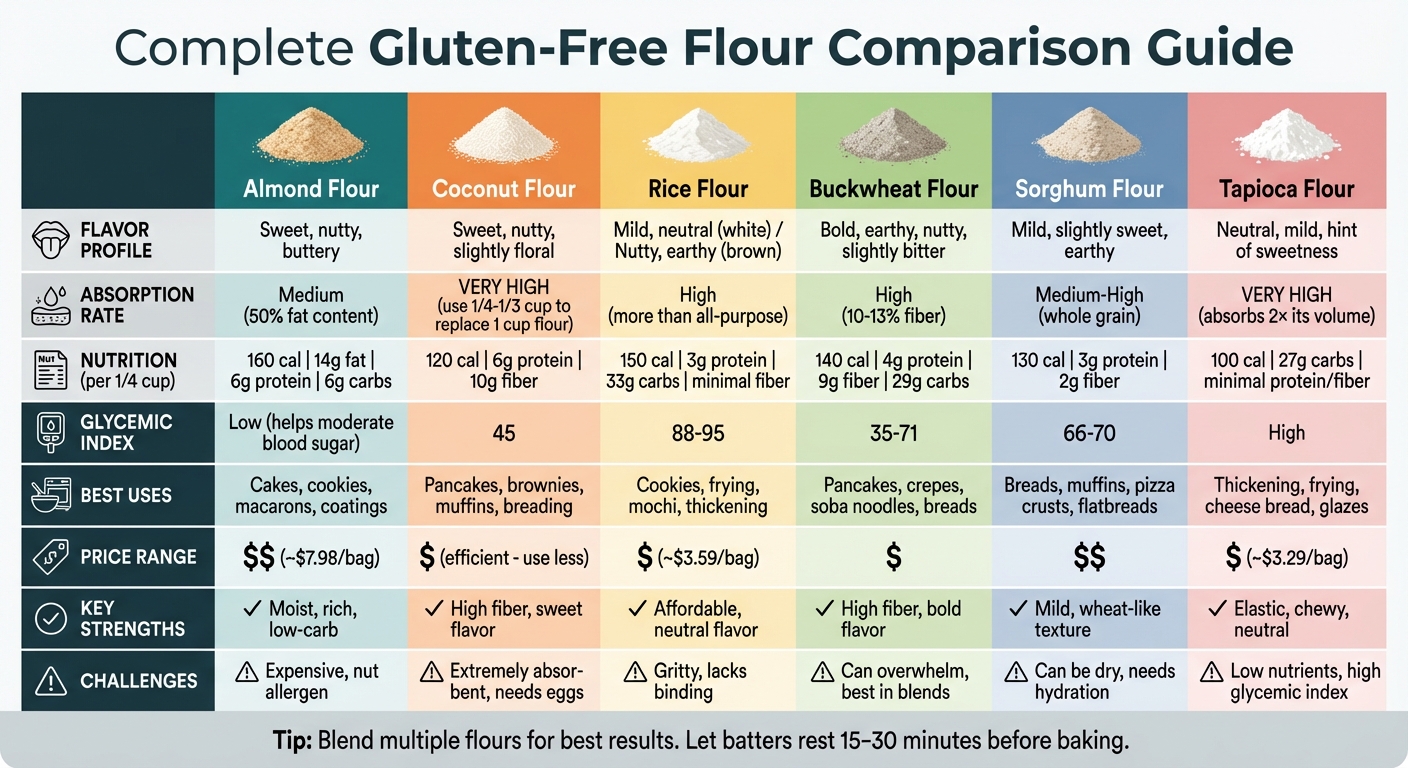
Gluten-Free Flour Comparison Chart: Properties, Uses, and Nutrition
TOP 10 WHEAT FLOUR ALTERNATIVES | Gluten-Free | Paleo | Keto
sbb-itb-ac3a9b8
1. Almond Flour
Almond flour brings a naturally sweet, nutty, and buttery flavor to recipes, making it a favorite for many baked goods.
Absorption Rate
When it comes to absorbing liquids, almond flour sits in the middle ground - it takes in more liquid than wheat flour but less than coconut flour. Thanks to its 50% fat content, it adds moisture to recipes. To get the best results, reduce added fats and let your batter rest for about 5–10 minutes before baking. Since it doesn’t contain gluten, you’ll need a binding agent like eggs, flaxseeds, or xanthan gum to hold everything together.
Best Uses
Almond flour works wonderfully for cakes, cookies, macarons, and even as a coating for fried or baked dishes. It produces rich and moist results, though baked goods tend to be slightly denser and flatter. To avoid over-browning, lower your oven temperature by about 25°F. If you’re substituting almond flour for regular flour on a 1:1 basis, add an extra egg for structure, and let your baked goods cool completely before slicing to prevent crumbling.
Nutrition
A 1/4 cup serving of almond flour packs about 160 calories, 14 grams of fat, 6 grams of protein, and 6 grams of carbohydrates. It’s also a good source of Vitamin E and Magnesium, which makes it a popular choice for low-carb and keto diets. Plus, it can help moderate blood sugar levels. Research even suggests that eating more almonds may reduce LDL cholesterol by an average of 5.79 mg/dL, offering added health benefits.
Price and Storage
Almond flour tends to be pricier than all-purpose wheat flour. Its high oil content means it’s prone to spoilage, so proper storage is key. Keep it in an airtight container in the refrigerator for up to six months or in the freezer for up to a year to maintain freshness.
Up next, we’ll dive into the unique qualities of coconut flour and how it compares in baking.
2. Coconut Flour
Flavor Profile
Coconut flour brings a sweet, nutty, and slightly floral aroma to the table, making it a versatile option for both sweet and savory dishes. In baked goods like cookies or pancakes, its natural sweetness enhances flavor without extra sugar. Meanwhile, in savory recipes such as tortillas or crispy coatings, it adds a subtle, toasty undertone. Its flavor is distinct but not overpowering, letting stronger ingredients like chocolate shine through.
Absorption Rate
Coconut flour is incredibly absorbent - think of it as a sponge in powdered form. It soaks up liquids quickly and thickens as it hydrates. Because of this, you’ll only need about 1/4 to 1/3 cup of coconut flour to replace 1 cup of traditional grain-based flour. Recipes often call for 6 to 12 eggs to provide the necessary moisture and structure. As baker Carolyn Ketchum puts it:
It's like a sponge in powder form, taking in a remarkable amount of eggs, oil and other wet ingredients, and still staying as thick as porridge until it finally reaches saturation.
For the best results, let your batter rest for 3 to 5 minutes after mixing to allow the flour to fully hydrate. Avoid substituting it 1:1 with other flours, as this can lead to dry, crumbly textures.
Best Uses
Coconut flour shines in recipes like cakes, muffins, pancakes, and brownies, delivering textures that range from light and fluffy to rich and fudgy. It’s also a great choice for grain-free breading on meats. A single 16-ounce bag, priced around $4.00, can stretch to make 5 or 6 dishes, making it a budget-friendly option.
Nutrition
A 1/4 cup serving of coconut flour contains 120 calories, 6 grams of protein, and a hefty 10 grams of fiber - over four times the fiber in all-purpose wheat flour. It also provides 13% of the daily potassium value and 11% of the daily iron value. With a glycemic index of 45 (compared to 85 for all-purpose flour), it’s a popular choice for managing blood sugar levels, especially in low-carb diets. Plus, it’s naturally nut-free, making it a safer alternative for those with nut allergies. Up next, discover how Rice Flour stacks up with its own unique set of characteristics for gluten-free cooking.
3. Rice Flour
Flavor Profile
Rice flour, unlike coconut flour, brings a mild and neutral taste to recipes, allowing other ingredients to take the spotlight. White rice flour is particularly subtle, making it perfect for highlighting flavors like chocolate, vanilla, or spices. On the other hand, brown rice flour offers a slightly nutty and earthy taste, which works well in heartier baked goods and savory dishes. This understated flavor makes rice flour a flexible choice for everything from delicate cookies to crispy tempura.
Absorption Rate
Rice flour is more absorbent than all-purpose flour, which can sometimes lead to dry or crumbly results if substituted directly. Erin Higa, a researcher and writer at The Coconut Mama, emphasizes:
Since rice flour can absorb more liquid than all-purpose flour, it's important to adjust the liquid content in your recipe to compensate for its higher absorbency.
To achieve the right balance, use a 7:8 ratio - 7 parts rice flour to 8 parts all-purpose flour - and adjust liquids as needed. For the best results in baked goods, let the batter sit for 20–30 minutes before baking. This resting period ensures the flour fully hydrates, improving texture.
Best Uses
Rice flour shines in a variety of culinary applications. It’s excellent for creating light, crispy coatings in frying, serves as a reliable thickener for sauces, and is a key ingredient in traditional dishes like mochi, rice noodles, dumplings, and dosas. A bonus? It absorbs less oil than wheat flour, leading to lighter, less greasy fried foods. Certified nutritionist Sarah Ryan shares:
As a flour batter, I love white rice flour and prefer it over cornstarch to get that crisp on the outside of pan-fried fish.
In baking, rice flour is ideal for tender cookies, shortbread, and sponge cakes. However, its lack of gluten means it’s not the best choice for high-rising yeast breads when used alone. Its versatility makes it a go-to for gluten-free cooking.
Nutrition
A 1/4 cup serving of white rice flour contains about 150 calories, 33 grams of carbohydrates, 3 grams of protein, and minimal fiber. Brown rice flour, which keeps the bran and germ intact, offers slightly more protein (8 to 11 grams per cup compared to the 6 to 9 grams in white rice flour) and a modest amount of fiber. However, rice flour has a high glycemic index - between 88 and 95 - making it higher than all-purpose flour, which averages around 85. On the bright side, rice flour is nut-free, making it a safe option for households managing multiple allergies.
Price per Cup
Rice flour is an affordable gluten-free option, readily available in most supermarkets. Its cost-effectiveness makes it a practical choice for everyday cooking and baking. Up next, we’ll dive into the qualities of buckwheat flour for gluten-free recipes.
4. Buckwheat Flour
Flavor Profile
Buckwheat, despite its name, isn’t related to wheat - it’s actually a pseudocereal seed tied to rhubarb and sorrel. Its flavor stands out with bold, earthy, nutty notes and a subtle bitterness, making it distinct from milder gluten-free flours. Light buckwheat (hulled groats) has a more delicate nuttiness, perfect for crepes, while dark buckwheat (with hulls) brings a deeper, heartier flavor, ideal for rustic breads.
Absorption Rate
With 10–13% fiber content, buckwheat flour absorbs water efficiently, much like protein-rich gluten-free flours such as sorghum or quinoa. However, this can sometimes result in a drier or gummy texture if not balanced with additional liquid. Allowing batters to rest for 10–15 minutes can help. For the best outcomes, use buckwheat as 25% of the total flour in cookies and muffins, or keep it to about 15% in yeasted breads to ensure proper rising.
Best Uses
Buckwheat flour shines in dishes like Japanese soba noodles, French galettes, Russian blini, and gluten-free pancakes. Its robust flavor pairs beautifully with savory recipes such as rustic breads, crackers, and hearty quick breads. On the sweeter side, it complements chocolate, cacao, fruits, and warm spices like cinnamon or nutmeg. Because it lacks elasticity, it’s often blended with milder flours (like rice) or starches (like tapioca) to balance both flavor and texture.
Nutrition
A 1/4 cup of buckwheat flour offers about 140 calories, 29 grams of carbohydrates, 4 grams of protein, and 9 grams of fiber - meeting roughly 32% of your daily fiber needs. It’s packed with essential minerals, including magnesium (233 mg per 100g) and iron (3.84–4 mg per 100g), as well as manganese, copper, and phosphorus. Additionally, buckwheat contains rutin, a polyphenol with anti-inflammatory properties, and the antioxidant quercetin. With a glycemic index of 35 to 71, it’s a more blood-sugar-friendly option compared to all-purpose flour, which has a glycemic index of about 85.
Price per Cup
In terms of cost, buckwheat flour sits in the middle range among gluten-free flours. It’s less expensive than nut-based flours like almond or hazelnut but slightly pricier than basic rice flour. Its rich nutritional profile and distinctive flavor make it a great addition to any gluten-free baking lineup. Up next, we’ll see how sorghum flour measures up in gluten-free baking.
5. Sorghum Flour
Flavor Profile
Sorghum flour has a mild, slightly sweet flavor with earthy undertones, making it a versatile choice for both sweet and savory dishes. Its natural sweetness shines in desserts like cakes, cookies, muffins, and waffles, while the earthy notes pair well with savory recipes such as flatbreads, sandwich breads, and crackers. Christine Brady from Zest for Baking describes it as:
Ground sorghum grains are slightly sweet with an earthy, grassy flavor.
To avoid a sour aftertaste or dryness, keep sorghum flour to 25–30% of your flour blend.
Absorption Rate
Being a whole-grain flour, sorghum absorbs more water than refined options like white rice flour but less than coconut flour. To counteract dryness, increase liquids in your recipe by 15–20% or incorporate additional fats like butter or oil. Since the flour tends to clump, sifting it before use is recommended. For better structure in baked goods, add xanthan gum - use 1/2 teaspoon per cup for cookies and cakes, or 1 teaspoon per cup for breads.
Best Uses
When mixed with other gluten-free flours such as rice, tapioca, or potato starch, sorghum flour works well in a variety of recipes. It’s great for breads, muffins, pancakes, waffles, and pizza crusts. For specific combinations, try pairing it with buckwheat for pancakes, oat flour for cookies, or almond flour for pizza crusts. Beyond baking, it can act as a crispy coating for fried foods and as a thickener for gravies, sauces, and stews. Sorghum flour is also a traditional ingredient in Ethiopian injera (fermented flatbread) and Indian jowar rotis (unleavened flatbread).
Nutrition
A 1/4 cup serving of sorghum flour provides 130 calories, 3g of protein, and 2g of fiber. Per 100 grams, it offers 8.5–10g of protein, 6.6g of fiber, and 3–4mg of iron. It also contains 3-deoxyanthocyanidins, a type of polyphenol known for its antioxidant properties. With a glycemic index of 66–70, it has a moderate effect on blood sugar. Plus, it’s low-FODMAP, making it a good choice for individuals with IBS or sensitive digestion.
Price per Cup
Sorghum flour is often more expensive than other gluten-free flours and can be harder to find in regular grocery stores compared to options like rice or tapioca flour. Jaron, the founder of Foodsguy.com, notes:
Sorghum flour is taking the world by storm! ... This flour is extremely nutritious, easy to use, but hard to find. Not to mention the price tag that accompanies it!.
While it may cost more, its nutritional benefits and versatility make it a valuable addition to any gluten-free pantry. Next, we’ll dive into the unique qualities of tapioca flour.
6. Tapioca Flour
Flavor Profile
Tapioca flour is known for its neutral and mild taste, with a hint of sweetness that blends seamlessly into recipes without overpowering other flavors. When heated, it becomes translucent and adds a glossy finish, making it a go-to for highlighting other ingredients. As WebMD points out:
Tapioca flour has a neutral flavor, which is one reason it's a favorite of bakers.
Absorption Rate
One of tapioca flour's standout traits is its ability to absorb up to twice its volume in water, and it does so almost instantly when heated. Compared to cornstarch, it absorbs liquids faster. This quick absorption is particularly helpful in gluten-free baking, where it adds elasticity and a chewy texture to doughs, mimicking the qualities of gluten. To avoid clumping when using it to thicken sauces, mix it with an equal amount of cold water to create a slurry before incorporating it into hot liquids.
Best Uses
Tapioca flour shines in a variety of roles, from thickening fruit pies, soups, and stews to creating glossy gravies. In gluten-free baking, it works best when it makes up 10–25% of the total flour blend, providing chewiness and structure without turning the final product gummy. It’s also a favorite for crispy coatings on fried foods like chicken or fish, and it’s a key ingredient in Brazilian cheese bread (pão de queijo). Additionally, it works well as a binder in recipes like meatballs and veggie patties. Tapioca flour holds up well to freezing and reheating, making it a smart choice for freezer-friendly meals.
Nutrition
A 1/4 cup serving of tapioca flour delivers roughly 100 calories and 27 grams of carbohydrates, with minimal amounts of protein and fiber. Per 100 grams, it also contains 26.9 mg of calcium, 14.6 mg of magnesium, 0.59 mg of iron, and 0.12 mg of zinc. However, as an extracted starch rather than a whole grain, it lacks significant amounts of protein, fiber, and essential vitamins. Its high glycemic index means it can cause rapid spikes in blood sugar levels. On the plus side, it’s low-FODMAP and free of common allergens like nuts and dairy, making it a versatile choice for many diets.
Pros and Cons
Every gluten-free flour comes with its own set of strengths and weaknesses, making it important to choose based on your recipe and budget. While the detailed profiles above dive into specifics, this section provides a quick overview of the main trade-offs for each flour. One key thing to keep in mind: no single gluten-free flour can perfectly replicate wheat flour.
"There isn't one gluten-free flour that can fully replace wheat."
Here's a summary table outlining the primary benefits and drawbacks of each type of flour:
| Flour Type | Pros | Cons |
|---|---|---|
| Almond Flour | High in protein, adds moisture and richness, low in carbohydrates | Expensive (~$7.98 per bag), nut allergen, higher calorie content than wheat flour |
| Coconut Flour | High in fiber (39g per 100g), sweet aroma, very efficient (small amounts suffice) | Extremely absorbent (requires 2–3× its weight in liquid) |
| Rice Flour | Affordable (~$3.59 per bag), widely available, mild and neutral flavor | Gritty texture, lacks binding power, potential arsenic concerns with frequent use |
| Buckwheat Flour | Rich in antioxidants, earthy flavor, moderate protein content | Strong flavor that can overwhelm, best used in blends (e.g., 50/50) |
| Sorghum Flour | Offers a wheat-like texture, good natural binding, whole-grain benefits | Can feel dry or grainy, needs extra hydration for best results |
| Tapioca Flour | Adds elasticity and bounce, affordable (~$3.29 per bag), neutral flavor | Low in nutrients, high glycemic index, lacks protein and fiber |
Cost Considerations
Price is a major factor when choosing gluten-free flours. On average, gluten-free products cost 242% more than their conventional counterparts, with gluten-free flours priced at